November 14, 2011

A 3D Salute


Kristin Donley,
2012 Colorado Teacher of the Year
and 3D Educator

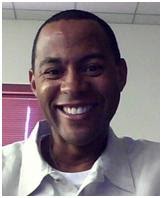
Described by students as "better than an encyclopedia and the Internet," Monarch High School biology teacher Kristin Donley was recently named the 2012 Colorado Teacher of the Year.

Why is this important in the world of 3D? You see, Kristin, was one of the nation’s first 3D educators. She was a lead teacher in the BVS3D case study, a lead teacher informing the American Optometric Association’s (AOA) See Well, Learn Well report, and has provided captivating presentations at ISTE and technology conferences over the last two years.  She is a talented and influential force in shaping what the 3D classroom is and ought to be. This honor is doubly important. It confirms that teaching with 3D is not a fringe activity—it is a technological tool used by our nation’s best, brightest, and most creative teaching professionals. Kristin represents the long line of creative teachers who have been drawn to the promise of 3D in teaching and learning, not to mere hyperbole or technology fads.  Megan McDermott, a Colorado Department of Education spokeswoman, agrees: "The award is quite prestigious—the recipient becomes the Colorado nominee for National Teacher of the Year."


Monarch students honor Donley
in an all-school assembly.
Kristin Donley received both her undergraduate and graduate degrees in molecular, cellular and developmental biology at the University of Colorado at Boulder and has been teaching for 17 years, with 10 of those years at Monarch High School, in picturesque Louisville, Colorado. She is surrounded by many equally talented peers, but we take this time to honor her singular talent and dedication. Congrats!


November 7, 2011

3D Jedi Conclusion (3)


Concluding our series on North Carolina’s 3D Jedi, (see post 1 and post 2), it is fair to say that Epps has not made it this far without solid commitment from his community. Epps notes: “The BRAC Regional Task Force, which is a base realignment and closure group (an organization closing bases across the country, consolidating troops, and relocating them to new areas) led the initial effort by funding our previous program, placing 3D labs in eleven high schools.” And now, BRAC is ramping up their investment. “BRAC aims to further shape the educational landscape of the 21st Century” by expanding and adding more content and equipment, totaling thirty-one systems in eleven counties.

As a result of Epps’ G.R.E.A.T. 3D Academy, some local business leaders have also changed their perspective about education: instead of thinking that schools should be producing a traditional workforce, they now believe that high schools are capable of producing a highly skilled workforce. Again, Ben Dibble reflects that his work in producing stereo 3D as a student “helped me become very independent and, at the same time, it taught me to work with a group. It taught me not to wait for opportunities to open up, but instead make my own.“ Given the current STEM (science, technology, engineering and math) education challenges we face, Jeff Epps appears to be well along the road toward producing a highly marketable workforce, while investing in his state’s own and most promising resource—its potential-rich youth.

Epps' project is not without significant challenges, however. “We’re looking for more business leaders as partners,” he indicates. “We need assistance from the engineering community to help expose students to the engineering experience—we need internship opportunities for our student once they become comfortable using 3D design software.” He is not only seeking physically close internships, but also remote internships. “I need people that can video conference with our students, look at their content, and challenge our interns to improve their work.” He is also looking for laptops to put in the hands of students. “When those kids get laptops in their hands, they take them home; while they’re at home, they’re doing more. We find that they actually do extra work without complaining.”  Epps is also hoping to find more modern 3D content development software. (If your organization is interested in partnering with Epps, field testing products, or recruiting his growing army of students, please consider contacting Director Epps at jeffepps@richmond.k12.nc.us.)

It is becoming clear that not all 3D content development will emerge solely from creative production houses. Student-created content will soon become a disruptive element in the content development market. For that reason, I’ve always advised 3D content development companies to develop a simple authoring tool for student use. Then, I suggest they begin to strategically tap into this growing developer community well before it begins to tap into their revenues. 

October 31, 2011

Return of the 3D Jedi (2)


The strength of Epps’ 3D Academy described in last week’s post is based on the notion that relevance, context and authenticity in learning really do matter. Epps explains:

"We see this as a great opportunity for students to use a 3D skill set to give them a better [and more relevant] understanding of math and science concepts. And what better concepts are there to visualize than the very concepts that they’re weakest in? If they can design it, they’re going to have to understand it. It’s a win-win: the student has now mastered a specific weakness in math or science and the teacher now has a tool that she can use with other students."
Students designing  and testing stereoscopic 3D content in North Carolina
Here’s how Epps strategy works: imagine a middle school math student who still struggles with fractions. Working closely with her math teacher, Epps anticipates crafting a design-build project that fortifies the student’s own math skills, while at the same time provides the teacher with a 3D visualization tool that can help instruct other struggling students. In designing this project, according to Epps, our young middle schooler “will soon acquire a better-than-average understanding of fractions that will get her past this unfortunate hurdle in math skills.” (Social studies applications are also possible. During middle school “I made pyramids, burial chambers, and a simulation of the launch and orbit of the Sputnik satellite,” Ben Dibble recalls.)

Asking your students to design stereoscopic 3D learning objects can also leverage improved student performance in critically important science skills. Creating a visual model of the human cell can contribute directly to mastery of learning by students who struggle to understand abstract concepts that they ordinarily cannot see. Asking students to create stereoscopic 3D learning objects that require precise measurement, metric conversion, and tool calibration skills will go a long way toward cementing some of the most critical prerequisite skills in understanding science. 3D design projects also provide a powerful seedbed for improving other building blocks of science achievement, such as tentative explanation, putting raw data into graphical form, and, of course, technical writing.  

October 24, 2011

Return of the 3D Jedi


In a previous post, we introduced our blog readers to the 3D Jedi Knight, Jeff Epps. This post is a continuation of his story, more than a year later. 

Jeff Epps
North Carolina's 3D Educator
Jeff Epps, the Director of Information Technology for North Carolina’s Richmond County Schools, has recently formed the G.R.E.A.T. (Globally Ready Engineering and Technology) 3-D Academy. His solution is effectively simple: take on any students who have the interest and aptitude for learning 3-D; connect those students with both a relevant context for learning and supportive classroom teachers; and then leverage that interest to enable students to reach higher levels of performance in science and math.

 “You bring us any students that have the willingness to learn how to design 3D content, regardless of their academic challenges, and we can help get them to new levels of math and science, “ he states “—we can turn them into engineers and designers.” One student, Ben Dibble, serves as a clear instance of Epps remarkable vision. 

Ben Dibble
Richmond Early College High
Ben, currently a student at Richmond Early College High, describes his motivation in wanting to make 3D artifacts “to help teachers make students understand concepts better—and I found when I did make things for the teachers, I understood the concept better when I finished also.”

Happily, Epps’ 3D dream is an opportunity open to all children, not just the usual suspects. He observes:

“I felt there were a lot of students that were getting overlooked in terms of talent. There are students that may not be academically talented, but are very well rounded with technology. I thought about launching a program that’s inclusive and not exclusive of students. We are reaching out to females, children of color, and special needs students. One of our top graduates has been accepted to the Art Institute in Raleigh, North Carolina. He has Asperger’s syndrome--and yet he was the best 3D modeler in our district.”
Epps believes that “anybody can learn higher levels of math and science if they just want to. That’s why this technology needs be accessible to all.”  

In our next post, we’ll take a closer look at exactly how Epps’ impressive project builds academic and technical skills through relevant, contextual, and authentic learning.

October 17, 2011

Research in Europe


A large-scale European research project, under the leadership of Dr. Anne Bamford (University of the Arts, London, Wimbledon) just been released. The LiFE I (Learning in Future Education) study examined the use of stereo 3D in classrooms in seven countries, including the U.K., France, Germany, Italy, Turkey, The Netherlands, and Sweden. The project involved fifteen schools, fifteen classes, forty-seven teachers, and well over 740 students. This report is free, and available by registering at this link.

It is clear that we are observing continued evidence that the educational advantages of using 3D in the classroom reverberate across oceans and distinct cultures. It appears we are improving our understanding of the way stereoscopic 3D affects the learner’s brain, how it impacts learning in the classroom, and how teachers can leverage this new medium to an advantage.
 

October 10, 2011

Educational Effort


Clearly, one of the biggest challenges we face in 3D is educating the public. For example, did you know that:
  • 53% of parents surveyed* believe 3D viewing is harmful to a child's vision or eyes?
  • Nintendo warns in their posted health and safety information that children below the age of six should not use their 3D technology?
  • Neither of the above concerns have a foundation in fact, based on past and current research?
* Based on the American Optometric Association's (AOA) 2011 American Eye-Q ® survey

As the K-12 educational advisor and member of the writing committee for the report, I am compelled to say that See Well, Learn Well is not only a significant national health report, but also an extraordinary educational tool for students, parents, schools, universities, manufacturers, and software designers alike. Not only is the main report well designed and classroom ready—Appendix C in the report offers a full range of websites, blogs, and other resources to extend your learning about the benefits of 3D in teaching and vision health. 

See Well, Learn Well is also supported by a rich and growing array of behind-the-scenes online resources. Go to 3D Eye Health for great videos and supporting information. This support site offers highly interesting treatments of 3D benefits, the 3D’s of 3D Vision, and how you know when it’s time to see an eye doctor. The site also offers a growing FAQ section with such timely topics as disinfecting glasses and how long a child should watch 3D.

Learn as much as you can. We are all a part of this important educational effort.

October 3, 2011

A Hopeful Report


It is important to note that the AOA’s position paper, “See Well, Learn Well.” is considered a Public Health Report. What does that mean? It means that this report carries both consequence and a very hopeful message. It carries consequence in conveying the message that vision matters—in learning and in life. You see, if a child cannot see 3D in the natural world, that child will struggle in reading from an early age—and she will often struggle to see lessons from the back of the room. As she grows older, that same child will be less successful competing in athletics or safely driving a car. Her overall quality of life will narrow, as she will be less able to enjoy the natural world that surrounds her, which is, of course, a 3D world.  The report carries consequence by demonstrating that 3D carries profound implications for improving the nation’s vision health.


The report is also hopeful. It is hopeful because the report suggests that these new 3D technologies offer us a pathway that can lead to more successful educational experiences for our children.  It is auspicious because this technology portends earlier diagnosis of vision disorders. It is promising because it carries with it the remarkable potential for fundamentally eliminating entire generations of eye disorders, such as amblyopia (lazy eye), through early detection.

The message of “See Well, Learn Well” is straightforward. A child is diagnosed with a congenital eye disorder at age five—which is 5 or 6 years earlier than this would normally have been diagnosed. Then there are the stories of those who faced serious academic struggles in school until their natural 3D vision was addressed. The message is not lost on me either. I am legally blind in one eye—the result of childhood amblyopia—so I know what this means at a deeply personal level.

September 26, 2011

See Well, Learn Well


Late last week, after a year of eager anticipation, the American Optometric Association (AOA) released a new public health report “3D in the Classroom: See Well, Learn Well.” This national report recognizes a tremendous health benefit from viewing 3D and launches a two year national campaign to encourage the eye health of our nation’s youth. You can view or download the full report by clicking on the link above. 

September 19, 2011

3D Myth Busting II


Unfortunately, it’s time for another 3D myth busters posting, with the same hopes of correcting “some persistent inaccuracies, lest they lend themselves to the unfortunate role of myth-building.”

On September 7th, I noticed an article published in the venerated Wall Street Journal: “Coming Soon to Schools: Dissecting Frogs in 3D.”  And then today, this news broadcast hit my email. I’d like to simply and briefly address three misconceptions:

“There are no health problems…as long as videos are kept to increments of 5-10 minutes.”
“No one wants to make our kids guinea pigs with new technologies”
“Financial concerns…”

So in the interest of further myth busting, here’s the truth, unembellished and straight up:
  • Most educational 3D videos are already short in length (4 minutes on average—please refer to last week’s post). And classroom teachers don’t show 3D movies; they may use 3D vignettes or in-class simulations. Based on the See Well, Learn Well national health report being released in the first week of October, the only recommendation is to avoid showing 3D content for an entire class period, allowing the eyes to readjust to normal during the last ten minutes in class. There is no scientific evidence requiring such restrictive time limits (5-10 minutes) on viewing stereo 3D either in the classrooms, at the movies, or at home.
  • Over my 37 year career in education, most often at the very vanguard of educational technology, I have kids have never seen kids become guinea pigs. Schools, teachers and classrooms take on the roles of pioneers, early adopters, followers, or late adopters. All is undertaken for the direct benefit of student learning.
  • Costs are rapidly coming down. When I saw my first stereo 3D classroom in a community college 7 years ago, the cost of the project was $44,000 and funded by a federal grant. Three years ago, the cost fell to $15,000 per classroom in an Illinois school district. Two years ago, the cost approached $10,000 per classroom. At the start of our project in Boulder, I estimated the cost at much less than $7,500 per classroom ($4,500 without any software included). 3D glasses cost $150 a pair two years ago, and this summer I saw 3D active glasses offered in the low 30’s. Within two years, I expect the cost will approach approximately $2,500 a classroom, including software. (And remember one system was shared by 3 classrooms in one of our schools, by the way). Can you see the cost trajectory here? This happens with all cutting edge technologies, as they trace their pathway from innovation to systematic adoption. Costs come down.

September 12, 2011

What is eS3D?


As we wrap up our series on the importance of common language, let’s focus on stereoscopic 3D in the world of education (or, eS3D). Confusion about what we mean by educational 3D content is still widespread. In fact, a dozen-or-so talented 3D content producers I have chatted with recently think it is all about 3D movies.

Contrary to the thinking of many industry experts, educational stereo 3D content is not just 3D movie content with an educational purpose.  First, eS3D involves any or all of the six categories of content demonstrated in the taxonomy chart shown below:


Although some big players seem satisfied with plans to roll out content associated with the first category (movies), this is the content least in demand by educators. Second, the kind of eS3D that educators require is generally shorter in length than other 3D content. Third, it involves less rapid movement and is far more static, than the images one sees in movies, games, or 3D sports television. Fourth, eS3D is often interactive in nature. Last, eS3D more richly favors negative parallax over positive parallax in highlighting essential learning. 

Content developers that think otherwise are just barking up the wrong tree. What is your opinion? Please post your thoughts.

September 5, 2011

Why Language Matters


“I remember sitting on a National Science Foundation panel some years ago, feverishly sorting through 10-12 semi-final proposals in a high-stakes review for a major grant award. As one particular grant came to the head of the queue for a thorough panel discussion, it was clear that the technology-based theme introduced in the grant had been misinterpreted by most of the distinguished panelists crowded into our luxurious hotel conference room. I carefully tried to explain the grant writer’s intent to my peer panelists, but lack of clarity won out. Since the theme was interpreted in completely different ways by the panelists, the result was inevitable: the grant, a quite promising technology proposal, was not recommended for funding.”
This personal experience reflects the challenges we face when we don’t subscribe to a common language—a shared understanding—of the technology we embrace. I believe that this has now become a paramount issue, one vital for claiming the hoped-for footprint of 3D technology in K-16 classrooms.


Over the last year, I’ve often experienced considerable misunderstanding about the term ‘3D’.  Some of the unfortunate negative effects I’ve observed firsthand include:

-         Customers and conference attendees don’t attend sessions offered on the topic
-         Conference organizers obscure 3D presentations by shunting them toward less desirable venues, times, or days—or they deny presentation proposals altogether.
-         National think tanks, committees, publications, or thought leaders offer only the slightest consideration of stereoscopic 3D in their thinking, planning, white papers, or initiatives
-         School technology leaders think it’s just entertainment, so it’s simply not on their radar

The above happen because decision makers (and I’ve talked to so very many) are very busy people, can’t always keep current in our constantly evolving technology landscape, and simply don’t understand what stereo 3D is (or they think S-3D is something that it is not).

If we are hoping to convince school district leaders, persuade a principal, or induce parents to encourage classroom investments in 3D technology, then we need to be sure we have the same thing in mind. If we are planning to sell to schools, persuade distributors to carry and support products, or engage integrators to make it all work, then we need to be speaking the same language. 


But is educational stereoscopic 3D somewhat different from what we think stereo 3D is? I think so. So please check back with us for a concluding blog post, as we offer a startling realization about the nature of S-3D in classrooms. Cue the mystery music…


August 29, 2011

A Common Language

Over the last year, I have overheard many 3D professionals label ‘true’ 3D as:
3D (just 3D)
Stereoscopic 3D
Stereo 3D
3D Stereo
S3D
More importantly, I have heard non-3D technologies portrayed as:
3D (just 3D)
3D-like
Monoscopic 3D
Non-stereo 3D
Virtual 3D
Pseudo 3D
Although most of the public simply uses the term ‘3D’, Chris Chinnock, president of Insight Media and publisher of Large Display Report has long fretted over the confusion our mixed-up terminology causes in the minds of consumers, educators, and decision makers. Chinnock, an expert in projection, 3D, and display technologies, suggests that we use the term “rendered 3D” to refer to CAD drawings and other animations (computer-generated imagery or CGI) that use light, shading, texture, or perspective to create a simple ‘sense’ of 3D.  He separates this type of imagery from “stereoscopic 3D” (or S-3D), which involves the use of left and right eye image pairs. Chinnock advises educators: “I strongly urge you to adopt this [terminology] in the education field to start to help differentiate the differences.  We need to start with a common language.”


In our next post, we will explain why a common language—a shared understanding—is so important. In the meanwhile, please try out this social experiment embedded below. Imagine you were planning a presentation on stereoscopic 3D, but really wanted to draw the attention of conference organizers and attendees. What terminology would you use and why? Please contribute below...


August 22, 2011

What's In a Name?

Throughout this blog, there is an ongoing debate thread about what 3D is and what it is not. You can follow that thread by reviewing any of the links below:
3D @ ISTE 2011
Whether talking to parents, teachers, friends, relatives, professors, or casual acquaintances—it has become clear that the term 3D means different things to different people. Some think 3D is evidenced in Google Earth, when you zoom in to view a 3D-rendered scene; some think it is one of the 3D-like video games they play on their Xbox, PlayStation, or Wii; others think it’s nothing more than designing a 3D object using AutoCAD or SolidWorks; and still others see 3D as simply an entertaining app running on their Droid or iPhone.  Even more people feel 3D best describes an immersive virtual world such as Second Life. Sadly, none of these is what we mean by stereoscopic 3D. 

But this lack of shared understanding is now getting in the way. It’s getting in the way of teachers trying to explain it to principals; it’s standing in the way of resellers trying to sell 3D to education decision makers; and it remains a stubborn obstacle obstructing the pathway of 3D content providers trying to explain their visually rich offerings to all of the above-mentioned groups. So, in this and a short series of coming posts, we will attempt to conjure up a common language about what 3D is—with a surprise ending—how educational 3D is different, still.

August 15, 2011

3D Myth Busting


A recent magazine article features an old western ‘shootout’ between 3D and 2D projector technology. The article, published on August 1, 2011 in Tech&Learning magazine, highlights two districts and why they chose either 3D technology or 2D technology in their projectors. I was one of the individuals being interviewed. The premise of this article is a good one, but I’d like to correct some persistent inaccuracies, lest they lend themselves to the unfortunate role of myth-building:

"There is a lot more content" for a 2D projector.
"The direct cost of a 2D projector is less than" a 3D unit.
"3D [projectors] need to be kept sterile"
2D— “It’s what you expect in a classroom.”

So in the interest of myth-busting, here’s the truth, unembellished and straight up:

  • All DLP 3D-ready projectors are first and foremost, 2D projectors at the same time. In fact, a 3D projector is used as a 2D projector most of the day—and when you want to see 3D, your software simply tells the projector you are in 3D mode.  
  • Since all DLP 3D-ready projectors are also 2D projectors, they have access to all available content, whether 3D or 2D. The reverse is true for 2D-only projectors—they cannot project 3D content!
  • Our 3D projector cost $520 with 3D. If we had purchased it without 3D built in, it was $520. Do the math.
  • 3D projectors do not need to be kept sterile. Neither do glasses. The word "sterile" is a bit overstated. The recommendations found in the coming See Well, Learn Well report suggest the following common-sense guidelines: "Disinfect the 3D glasses thoroughly after viewings. This is most easily accomplished by using anti-bacterial sprays or wiping down each unit with a single disposable alcohol pad after use." And by the way, kids like the glasses.
  • “2D is what you expect in a classroom.” Over my career, I have been involved in the design and building of nine new schools and over twenty-six major remodeling projects. Over the span of those years, I often heard this kind of statement. It usually referred to such technologies as chalkboards, overhead projectors, analog clocks, VCR players, and CRT monitors. We build for the future, not the past.


August 8, 2011

3D School Safety (Part II)


In the previous blog post we announced that SchoolSAFE is currently developing a 3D training simulation for school emergency preparedness. Two key questions surface: “Why use 3D to do this and how does all of this fit in with school safety?

By employing 3D video to train schools in crisis response, SchoolSAFE hopes to evoke a strong “training dividend” from the compelling nature of 3D content. John Simmons (johnsimmons@schoolsafetypartners.org) explains that “by viewing brief 3D scenes, trainees can experience a level of stress that will test their ability to manage the incident as they communicate with first responders” while a school threat unfolds in front of them. “3D has such volume,” he reminds us, and that’s why his organization believes this will succeed. Simmons points out that most school emergencies must be addressed by school staff who are 7 to 20 feet away from the action. This corresponds to the distance from the 3D camera where the 3D effect would be most pronounced. And, according to Simmons, synchronizing 3D viewing with live two-way radio drills provides an intense interactive experience not common in the world of entertainment or gaming.

In addition, using 3D offers some economic advantages. Simmons explains "in these tough economic times, this interactive 3D experience brings down the cost of drills and exercises, and offers more opportunities to schedule high-quality training so that all school personnel and students can benefit." These simulations can also help overcome the challenges of teacher turnover and new incoming classes by maintaining a consistent level of training for newcomers year after year.

The goal of this partnership, an effort notably inspired and led by Colorado State Senator Steve King,  is to bring this training to 30,000 school safety personnel and 800,000 students in Colorado, and ultimately to 2.1 million school safety personnel and over 56 million students nationwide.

So how will schools react? Steve Hoban the Director of Operations, Security & Environmental Services for the Boulder Valley School District, is optimistic. “The use of the 3D technology holds great potential in the world of school safety,” he predicts. 3D technology and training simulations represent “an opportunity to be more efficient with training, while still giving the recipient a more realistic feel for the crisis event being addressed,” he adds.

While attending the most recent meeting of Colorado’s School Safety Task Force, Jim Chabin, who is President of the International 3D Society, agreed:

" Using the immersive strengths of 3D media to better present, illuminate and stimulate educational subjects for students, teachers and leaders responsible for their academic success and safety, is an exciting opportunity. Once again, Colorado's community of committed educational stakeholders is leading the entire country in creating more exciting, and cost effective educational tools for this, and our next, generation of students. "

From a partnership perspective, school safety’s entry into the 3D world will bring a variety of players to the table—hardware, integration services, content development, and advertising. From an educational perspective, school safety could be a school district's first reason to invest in 3D classroom technology.

August 1, 2011

3D and School Safety


Think for a second about the community you live in. On any given work day, twenty percent of your community is involved in a K-12 environment. And if you add higher education to this count, the total number of community members actively involved in school locations exceeds twenty-five percent. That not only represents a huge footprint for public safety agencies, but a potential security “blind spot” if schools cannot communicate with them during emergencies.

As a result, SchoolSAFE recently announced the launch of a national 3D television campaign during National Safe Schools Week, October 16-22, 2011. SchoolSAFE has selected School Safety Partners to produce the 3D campaign with input from major 3D technology companies and school districts. The campaign will use live-action stereoscopic scenes and stereoscopic 3D animation, and will be delivered to general audiences, school staff, and students using all available platforms. The campaign will show how schools today must plan for a broad range of incidents and emergencies including: an active shooter, animal threats, bomb threats, a bus accident, chemical spills, earthquakes, fire, floods, food contamination, gas odor, intruders, pandemic outbreak, power outages, tornadoes, and severe winter storms.

SchoolSAFE’s plans offer some interesting content implications. “3D television channels are going to be hungry for product and sponsorship. Since the purpose of a TV channel is to use programing to gather a large audience and deliver it to the advertiser, the advertiser's message has to stand out. If channels are producing eye-popping 3D content, 2D advertiser messages are going to fall flat.” School Safety’s John Simmons predicts the emergence of more and more high-quality 3D advertising to fit in and keep stride with the new 3D content. "If our responsibility is to raise awareness in the community and try to influence public opinion about school safety, then our PSAs should be in 3D as well," Simmons says.

School Safety Partners then plans to create an interesting new mashup. It aims to leverage the impact of 3D with the power of interoperable two-way radio to create a pulsing, semi-live training simulation for school emergency preparedness. It’s interesting to note that the vision and impetus behind this effort comes from Colorado State Senator Steve King, who has a strong record in school safety legislation. 

Revisit our FutureTalk 3D blog next week to learn more details about this hallmark effort.

July 25, 2011

Mental Reconstruction

As our phase 3 BVS3D research efforts came to a close, we took the opportunity to conduct wrap-up site visits. While conducting student and teacher one-on-one interviews and observing 3D lessons, some interesting discoveries materialized. One such finding, emerging from our teacher interviews, we labeled learning replay, which is described in the previous post. Another student behavior we observed may perhaps be best labeled as mental reconstruction.

The phenomenon of mental reconstruction occurred frequently within our 3D classrooms, affecting both students and teachers alike. Students would explain that, while taking a test several weeks following a 3D lesson, they could clearly ‘see’ or visualize the concept, construct or phenomena in their mind as they tackled a question. One student I spoke with, immediately following a 3D classroom lesson, described that 3D helped him “see things more clearly in my mind—like building a mental picture.” This sort of spatial or ‘visual’ thinking was even evidenced by teachers, who saw pictures in their mind as they were planning for upcoming lessons.

As teachers described this phenomenon, noting the apparent mind’s eye reconstruction that was taking place, we knew we were observing something else unique coming out of our 3D classroom experiment— mental reconstruction. As more schools and universities engage in continued studies of 3D learning, this may track into a potentially useful research question. It may be useful to track, observe, describe, and explain the concept of mental reconstruction in your own projects.

July 18, 2011

Learning Replay

As our phase 3 BVS3D research efforts came to a close, we took the opportunity to conduct wrap-up site visits. While conducting student and teacher one-on-one interviews and observing 3D lessons, some interesting discoveries materialized. One such finding, emerging from our teacher interviews, we labeled learning replay.

The phenomenon of learning replay occurred frequently within our 3D classrooms: students expressed the interest in viewing 3D content over and again. Students wanted to see a segment one more time, to make sure that they understood the learning presentation; they wanted to view it again, in order to observe a specific phenomenon more carefully; they asked to see it again, not just because it was visually interesting, but because they wanted to think about a concept from a different perspective.

“Can we see it again?”
“Can we look at it one more time?”
“Can we run that segment over again?

These were the kinds of requests that teachers repeatedly heard. Interestingly, teachers never receive this kind of double-down request when using textbooks, PowerPoint, still graphics, or traditional video. The learning replay phenomenon also became evident after school, when students came in for extra help, tutoring, or to catch up due to an absence. Even though students could have quickly received their tutoring or completed their required makeup, and then rushed out to be with their friends and enjoin their social lives, students instead asked to review the 3D materials repeatedly.

As teachers described this phenomenon, noting the repeated student requests for viewing 3D learning content and witnessing firsthand the increased time on task, we knew we were observing something unique coming out of our 3D classroom experiment—learning replay. As more schools and universities engage in continued studies of 3D learning, this may track well as a potentially useful research question. It may be useful to observe, quantify, and explain the concept of learning replay in your own projects.

July 11, 2011

Findings from Phase 3

After taking some time for breaking news, we return now to our research series. The full "Phase 3" BVS3D research study conducted by Regis University is due to be released sometime in mid-to-late August. The following preview results, however, were highlighted during the Wednesday panel session at the ISTE 2011 conference:

All Grade Levels
  • High interest levels demonstrated by students
  • High levels of attention and focus demonstrated by students
  • Less disruptive behaviors in classrooms


Elementary School Findings
  • Special education students showed positive gains on post-test measures


Middle School Findings
  • Positive impact on student understanding, according to teacher observations
  • Visualization particularly helpful with the special education student


High School Findings
  • Positive effects noted on student written work (more detailed descriptions and illustrations of concepts were evident)

July 4, 2011

3D@ISTE: AOA Press Release

Some of the most impactful research in the world of educational 3D is being led by the American Optometric Association. Last week, at the ISTE 2011 conference, the AOA issued a special press release provided below, in its entirety:

Referenced at the bottom of the press release is a heart-warming story, an event which occurred just last week in Florida. When 3D viewing difficulties were identified in a kindergarten-aged child, the resulting comprehensive eye exam led to the discovery of a congenital eye muscle disease that can now be treated five years before it would typically have even been diagnosed.


It is also interesting to reflect on the notion that 3D technologies will likely be required in the treatment of many of the eye disorders now being safely diagnosed through the use of 3D in homes, schools, universities, and cinemas.