Showing posts with label Sensavis. Show all posts

September 18, 2017

Sensavis Refreshed

What's new these days with Sensavis, the 3D content manufacturer? I followed them over the years, and their recent efforts have lent themselves to a fresh perspective, a rebranding, if you will.

Sensavis continues their U.S. messaging, recalibrating their 3D offering in a smart way. Their previous product, called The 3D Classroom, is now simply called 'Sensavis'. This makes sense, because the nomenclature 3D sounds old-school these days, having been effectively replaced by a newcomer to the mat—VR. (See my past post about this evolution, "What's in a Name?") 


At the same time, Sensavis has reshaped and refocused their mission: “teach, create, activate.” This notion can be translated as better teaching (through visualization), easy content creation, and actively involving students in their own learning. A nice reverse move! Student content creation is the newest meme coming out of educational circles, and Sensavis is wise to make this transition.


January 9, 2017

FETC Preview

The Future of Education Technology Conference (FETC) is shaping up to be a must-attend event in Orlando, January 24-27. One of the largest and most innovative ed-tech conferences in the country, FETC has a long history of exceeding expectations. Here is a preview of what to expect in the arena of VR and 3D. I hope to see you there!
Expo
The exhibit hall this year will bring a number of players in both the 3D and VR fields to our attention. Samsung, Google, Nearpod, and Best Buy will likely be showing their popular VR solutions. Sensavis will return with their excellent 3D visualization content. A stalwart in the 3D and VR industry, Eon Reality will exhibit for the first time at FETC. And the venerable zSpace will be back in the house with their unique desktop virtual reality. (zSpace has won best of show at two consecutive ISTE conferences.)

Workshops
Four workshops will be offered with a VR meme: two by Samsung, one focused on Google Expeditions, a do-it-yourself virtual reality content creation workshop by Eon Reality, and my own in-depth VR workshop, described below.

Sessions
Concurrent sessions will offer a few interesting opportunities to learn about VR in education. One district will be presenting about their Nearpod immersive project, while innovators from North Carolina State University will do a deep dive into desktop virtual reality, focusing on zSpace technology. I will also be doing a session on Virtual Reality and a surprisingly positive connection to early learning/reading, entitled “See to Achieve: Virtual Reality, 3D, Vision, and Learning.”

My Sessions
Of course, I have to do a shameless plug for my own workshop. The FETC 3D VR Bootcamp (EDW070) is a distinctive experience, a very non-traditional workshop, to say the least. This workshop uses both a flipped learning model and a fishbowl approach to make for the ultimate in personalization. It will be offered from 5-7:30 pm on Thursday, January 26.  This highly popular
workshop will help you dig deeper, and go beyond the hype. We will explore 3D VR content, low cost options for VR headgear; teaching strategies; instructional weaknesses in the technology; how to deal with VR vision discomfort; managing VR in the classroom; disinfecting headgear; zSpace and their award-winning desktop VR; VR visualization spaces; and, of course, next-up developments to you can expect to see. Please join us!

December 12, 2016

3D @ ISTE: EXPO

Some pundits feel that 3D in education has peaked. But it didn’t seem that way at all at ISTE 2016, where 3D technologies evidenced their strongest and most mature presence in the history of that event. The ISTE 2016 educational conference, with over 16,000 in attendance hailing from 76 countries, is the largest ed-tech conference held in the U.S. 3D was well represented in both the exhibit hall. Here are some of the players we saw in action in the expo hall:
AVRover. 3D stalwart AVRover, offering their mobile 3D classroom platform, maintained heavy crowds and high interest every time I passed by. They are now partnering with DTI (see below entry) in offering an autostereoscopic lab platform that can provide a 3D visualization ‘breakout’ experience, taking AVRover content into the computer lab or classroom centers. Doug Smith, CEO of AVRover explained:  "AVRover and DTI are working together on a technology where educators will teach one-on-many using a mobile AVRover with a screen. In this scenario, the teacher manipulates stereo 3D objects for the students; but then the students can go to multiple workstations in the classroom or in a lab and can work on that same content, with autostereo, glasses free monitors.”
Dimension Technologies. Co-located in the AVRover booth, Dimension Technologies, Inc featured their autostereo display platform. Having worked with NASA for over twenty-five years, DTI just received a new SBIR Phase II E grant from both NASA and Boeing to build a glasses-free 3D display for aerospace. Tom Curtin, Director of Business Development, pointed out: “Education is a natural fit for this technology.” The cost to the customers is expected to be a 60% premium over traditional displays. 
Eureka. They offered a strong presence showing mesmerizing mono and stereo 3D content to passersby. What’s new? It seems like DesignMate is rebranding itself in the U.S. as the more internationally known Eureka.in.
Sensavis. Sensavis, a 3D visualization content company, ran a vibrant booth featuring some of their newest 3D simulations. It seems like they are showing a new simulation at each successive show, a remarkable pace for new content development.
Sterling Pixels. Sterling Pixels, a veteran 3D content company, broke away from the hidden corners of past booth locations to find themselves in a prime spot with much better visibility for this impressive company. 
Unity3D. Unity3D came to the exhibit floor with a fresh, vigorous vision to reach the education market. 
Visible Body. Although traditional 3D anatomy provider Cyber-Anatomy was noticeably absent from ISTE 2016, VisibleBody offered their rich visual anatomy lessons for STEM educators.

zSpace. Again winning Best of Show at ISTE 2016 from Technology & Learning magazine, zSpace continued in stride impressing large numbers of booth visitors. For a deeper dive, take a look at my most recent article with District Administration magazine entitled “Broadening the Impact of Technology.”

October 31, 2016

Sensavis Rising

Since we were on the topic of Sensavis last week, let’s continue. What’s new with this 3D company?

New Content.  Always striving to improve their suite of educational simulations, Sensavis
has added a robust segment to their treatment of DNA studies. This includes a comprehensive drill-down look at the entire DNA replication process, moving beyond DNA structure and including captivating simulations on replication, transcription, translation, repelling molecules, and the G-C & T-A molecule.

New Customers. The company has evidently brought some new educational customers to the table, including a school district in Tennessee and the Ministry of Education in Singapore. Apparently, much of the new content coming out was developed for the Ministry of Education in Singapore (but will be made available for all customers). In Singapore, the content is produced centrally, with the Ministry using Sensavis’ simulations to record their own educational videos. The resulting mixes are then utilized in over 180 schools in Singapore.

Personalizing 3D. Sensavis appears to be reaching entirely new markets by taking a new tack: enabling schools and teachers to record their simulations and produce their own videos, with voice annotation and flexible navigation of each simulation.  Mattias Boström, a past school principal and currently Director of Product Development for Sensavis, observes “The most important thing is that teachers don’t generally like to be told what and how to teach. Therefore we have added the capability for teachers to create their own simulations or walkthroughs.”

Fredrik Olofsson, CEO and President of Sensavis, provided an example: “One thing we see happening in Sweden—and all over Europe—is that we have a lot of refugees from Syria, Afghanistan, and other countries coming into Europe right now, and not many schools have Arabic speaking teachers on staff. So we just signed a contract with a local municipality to help them centrally develop videos for students.”  He adds: “One teacher in Finland has students record simulations and then teach the class for a coming session.” He beams: “Schools are starting to talk about having older students develop videos for younger students.”

The recording that is becoming so popular with educational customers is enabled through a Microsoft plug-in, Office Mix. Office Mix enables teachers or university lecturers to record screen content directly into PowerPoint. Olofsson grins and posits: “Imagine seeing our full HD, high-quality, interactive rendered 3D content in a classroom PowerPoint presentation. Full HD video.” Videos recorded with Office Mix can be uploaded for free into the cloud, then linked or embedded within other resources. This enables the content to be viewed on smartphones, tablets, or low-end laptops. Once uploaded, Mix provides a bevy of analytics and assessment features. 

October 24, 2016

A Case Study

Selling to Schools: A Case Study


Sensavis, the Swedish 3D content company, is experiencing more success at reaching educational customers with their 3D educational science content, the 3D Classroom, than many other content producers I know.  I wanted to discover why, so I spent time interviewing Mattias Boström, a past school principal and currently Director of Product Development for Sensavis,  and Fredrik Olofsson, CEO and President of Sensavis, with this goal in mind.

What I discovered was that Sensavis pursues a different strategy than most companies do. And I think that the folds and creases of this strategy can be informative for any industry hoping to penetrate the stubborn education market.  Here’s what I learned:

It’s all about the teacher. The centerline strategy of Sensavis appears to be their focus on meeting the needs of teachers, not just supporting the curriculum or providing content directly to students. It’s the teacher that matters to Sensavis. For example, “most companies add a lot of text and voiceover to their products, because they want to appeal directly to the student”, suggests Bostrom, who is also an experienced school principal. Sensavis content “leaves room for the teacher”, he explains.  

It starts where the customer is at, not where the technology is at. Most educational customers don’t have the technical wherewithal to broadly implement stereoscopic 3D. As a solution, schools and colleges are urged to invest in the rendered 3D content and make the move to the far superior stereo 3D content when they are ready. (The Sensavis content is provided in both rendered and stereo format, upon purchase.) Rendered 3D can support a variety of classroom formats: flipped, blended, online or face to face settings, without requiring the school to invest in additional hardware. A good example is the Tanglin Trust School in Singapore, which uses both rendered and stereo 3D in the classroom, as needed. 

It’s all about rightsizing. Sensavis has  enabled their content to run on minimal devices, such as the Microsoft Surface Pro and  ordinary teacher computers. I saw their newest simulations running on a Surface Pro, using a minimum i5 processor, 8 gigs ram, while running Microsoft operating system 8 or X with a 64bit installation. Their 3D sims can be run in either rendered 3D, or be connected to a 3D projector/display to run in stereo 3D. Even the rendered 3D is lifelike, full HD, fully interactive content. “We wanted to be able to install our simulations on any teacher’s computer”, explains Boström. 

It’s about user-created content. Oloffson explains: “What really attracts schools is the video recording segment of the product, which enables students and teachers to create their own educational videos.” He explains: “Teachers can manipulate any process in the recording. We recognize that teachers don’t generally like to be told what and how to teach. Therefore we have added the capability for teachers to create their own simulations or walkthroughs.”

It’s about pricing. Sensavis’ pricing strategies are also teacher friendly. That makes sense. If teachers can’t afford it on their own, or teachers pass on to leadership that a product is unapproachable, that’s the end of it.

It’s about sharing. In the U.S., teachers are isolated, One of the innovative developments now under design by Sensavis is the creation of a private cloud-based solution that can house teacher- and student-created animations, sharable across schools, districts or states.  This approach eliminates the need for each teacher, each school or each district to recreate the wheel with teacher-developed content? Why not store and share the best?

July 25, 2016

Growing 3D Organically (1)

(For the backstory, see last week's blog post)


Dr. Andy Kuniyuki
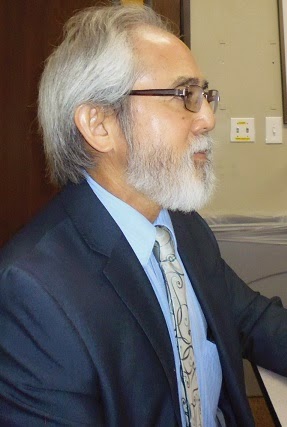
3D visualization (stereo, using passive display technology) continues to be integrated into every anatomy and physiology offering on campus at Nevada State. Systematized, if you will. And college leaders and faculty have not held pat. They have also integrated 3D visualization into their new student orientation activities. Dr. Andy Kuniyuki, Ph.D., Dean of the School of Liberal Arts and Sciences explains exactly how they do it:Every new student orientation is conducted in rooms where they show, side-by-side, 2d (PowerPoint) and stereo 3D visualization.” Dean Kuniyuki chuckles as he reminisces, asking the question: “which do you prefer?”  He knows the answer beforehand, but he is trying to excite students for the first time, exposing them to this valuable learning tool even before students attend their first classes. “They are thrilled that we have that possibility [3D visualization].”


Nevada State is also moving forward on their visualization agenda. First, 3D visualization is making a big move into the School of Nursing. Use of 3D visualization in anatomy and physiology classes initially caused the word to get out and spread. Hearing from the students themselves, college administrators were hearing that older students wanted these richly visual learning experiences, as well. Nursing school leaders knew that there was huge evidence that pathophysiology is a defining course for nursing students. The current emphasis for instruction is a nursing/whole person perspective. Yet, a firm grasp of pathophysiology is known to be a real predictor of how students will perform as nurses in the field. What the school was missing was a teaching perspective that zoomed down to the tissue, cellular, and molecular levels. 3D visualization could help with this specific instructional challenge by filling a missing link in their instruction. A plan was developed to have instructors from both the liberal arts/sciences and the school of nursing co-teach these nursing courses in the NSC visualization labs. The first co-taught offerings begin this coming spring.

In our next post, we will take a close look at a second wave of 3D visualization strategy at Nevada State College.

June 13, 2016

Accelerator (3)

In the two previous posts, we have focused on the notion of 3D as a learning accelerator. So, how does this all work? It’s no surprise. It's the power of visualization in learning. Sofia Kruth, the innovative school teacher identified in the last two posts, makes the following conclusions about the power of 3D visualization in the classroom:

In my view it is simply outstanding, I have never before seen or experienced this level of complexity when children this young talk and explain the process of making oxygen. If given a chance they can perform on a much higher level then given levels in the curriculum.”

Even the U.S. National Science Foundation National Institutes of Health note in their seminal report, calling for more visualization tool development: “Visualization plays a role in saving lives, accelerating discovery, and promoting education through improved understanding.”

June 6, 2016

Accelerator (2)

Last week’s post is an example of accelerated curriculum in action. It begs the question: can 3D visualization help even younger children learn more advanced topics, more thoroughly?

The answer is “Yes.” Here’s another compelling story, told by teacher Sofia Kruth at Sandhultskolan, evidencing how a teacher approached curriculum acceleration using the 3D Classroom to teach photosynthesis at a much lower grade level than is the norm— in first grade.

We started our school year (year 1) by planting seeds to see the growth. We went outdoors to look at trees and plants and how they change throughout seasons. Our curriculum for the younger years entails changes in seasons, along with simple lifecycles of plants and animals. One day in autumn a pupil in one of the upper classes found parts of a deer in the woods. We took care of it, processed the parts, and looked at them in class – we found a hip, upper hind leg, and bits of the backbone. The younger pupils wanted to be part of those discoveries, too. I allowed my younger pupils to examine the skeleton parts and after that we went to watch the human skeleton in 3D. My pupils were fascinated with the human skeleton and drew conclusions about the thorax movements as the person breathes. With these positive remarks, and the attention and curiosity that my young pupils showed, it made me think about other areas for using 3D visualization. 
In the Swedish curriculum the photosynthesis is mentioned for year 4-6, nothing in the earlier years. With my positive experience with the 3D-Classroom in studying the skeleton, I thought: “Why not? I will challenge my pupils and let them deepen their understanding of plants, carbon dioxide, oxygen and their correlation—and if it doesn’t work I will know that they are not ready.” 
Said and done. We took the time to set up the 3D-Classroom and clicked trough the menus together. My pupils were fascinated with the look of the leaf, the stomata and how the stomata open and close depending on access to light. We followed the cell and saw the “factory” inside, how everything moved while light and stopped when dark; we saw the “explosion” inside the leaf as carbon dioxide molecules met the water molecules and through solar energy created new substances in a chemical reaction; we saw the carbohydrates the plant used and the oxygen that is released into the air for us to breathe.

The 3D captured my pupils’ curiosity, but also helped them see and think beyond their normal capacity. One student spontaneously remarked “What luck there is daytime on the other side of the globe when we have night, otherwise there wouldn’t be any more oxygen.”  This pupil made correct assumptions and connections that included the earth’s axis and earth movements around its own axis and the sun with the chemical reaction inside a leaf. Rather complex thoughts and revelations from this young pupil (7 years old). The entire class drew complex schemata of how the photosynthesis works, schemata that entail the stomata, water molecules, carbon dioxide molecules, and the importance of light.

May 30, 2016

3D as Accelerator

For educators exploring mobile, large display, virtual reality or augmented reality platforms using 3D, it is important to know the value added benefits of these products. To date, most reports about the effectiveness of using stereo 3D in the classroom revolve around increased retention of learning, ‘wow’ factor, motivation to learn, and higher pre-test/post-test scores. What if there is another benefit we are missing entirely, something much more appealing to educators?

One advantage of teaching with 3D, based on recent learning experiences in advantage of teaching with 3D, based on learning experiences in Swedish schools, appears to be the acceleration of curriculum. The growth dividend associated with the acceleration of curriculum seems very attractive.  Here’s how it’s evidenced in some Swedish schools.


Using the 3D Classroom, a richly 3D simulation series produced by Sensavis, teachers in Sweden are seeing some surprising results, even at very young ages. At the intermediate school level, Principal Mattias Bostrom reported the following example of curriculum acceleration in action:

An 8th grade biology teacher using The 3D Classroom stopped having tests in anatomy at the end of a course. Instead he had the 8th grade students teaching what they had learned to 4th and 5th grade students, but using the same 3D visualization tools. This way he could better understand the depth of the 8th grade students’ knowledge. During the experiment, the instructor noticed that the 4th and 5th grade students asked tougher questions than he had imagined they would ask. The biology teacher, curious about what the younger students had learned, conducted another spot experiment.  He took the last year’s final test for 8th grade anatomy and gave it to the 5th graders. He was surprised and delighted when the 5th graders scored better on this test than last year’s 8th graders. Humorously, at the same time he was a bit worried what to teach the 4th and 5th graders when they became 8th graders. 

Stay tuned next week for a post involving curriculum acceleration by even younger students.

December 21, 2015

News from Sensavis

Sensavis, the creator of the unique educational product “The 3D Classroom,” together with partner Ed10x, has secured the first school district to implement The 3D Classroom with services and video rights for “flipped instruction” in all their schools. (The 3D Classroom is an intuitive and interactive 3D educational visualization tool which allows the teacher to explain complex and abstract subjects to students in a simple, visual, and understandable way.)

The Lincoln County School District in Southeastern Nevada can now produce their own professional development videos with high quality content on their own terms. With this district-wide licensing, teachers can share their best videos to their students working with “flipped classroom”, prepare substitute teachers with lesson resources in an instant, and as well as support students with personalized tutoring videos for class. “Lincoln County School District is energized and thrilled to partner with Sensavis. and provide our teachers the opportunity to incorporate an interactive 3D Classroom curriculum resource into their instructional strategies,” says Steve Hansen, Superintendent for Lincoln County School District. Fredrik Olofsson, CEO for Sensavis AB, the Swedish-based parent company of Sensavis, adds: “The 3D Classroom brings to Lincoln County School District a state of the art teaching tool that will enable students to grasp hard to understand concepts through stunning visuals.” Tiffany Kelly, CEO of Ed10x , explains: “It takes our Professional Development initiatives to another dimension… it fulfills one of our goals of capturing the students in those first few minutes of each lesson with technology enriched teaching methods. She adds: “Ed10x will also be working with Sensavis to develop a video lesson library and a peer to peer video library”.


Considering last week's post on Presente3D's new pricing, can you see a trend here? Again, we are beginning to rightly move away from the ponderous and onerous seat pricing model that has so plagued 3D in education to date. 

April 20, 2015

Unparalleled 3D Learning (2)

Nevada State College began a 3D project by purchasing and implementing a stereo 3D learning solution for their undergraduate science and nursing classes. (See last week's post.) Here is what I saw in Professor Patel’s classroom during my site visit:
 
Your basic 2D nephron illustration
The Lesson. The lesson involved a review of the nephron, the basic structural and functional unit of the kidney. What was unique was his side-by-side lesson approach: 2D, then stereo 3D. First, he explained how kidneys filter blood using the tiny nephrons to create filtrate. Using both his lecture and PowerPoint visuals, he showed how filtrate ended up becoming the final product, called urine. But then Professor Patel switched to a captivating stereo display, and took the students on a virtual field trip inside the kidney. He navigated inside the glomerulus, which is a tuft of blood vessels in the initial portion of the nephron where filtration specifically occurs. 
A 3D nephron
The Content. This stereo content was rich, remarkable, and simply unparalleled in quality. The textures, the colors, the closeness—all were simply striking. Part of the powerful effect of this lesson was created by the nature of simulation itself. The [Sensavis] 3D Classroom delivers what we have always expected and always wanted from 3D: the ability to go beyond superficial visualization. It offers the remarkable capacity to drill down, then go further down; to go inside, and then travel further inside. In short, to truly experience the long-desired “fantastic voyage” that 3D has always seemed to promise us.” I had seen the Sensavis software before, of course, but I had never seen its impact on a class full of students. It was all I had hoped for.
Andy Kuniyuki, Ph.D.,
Dean, School of Liberal Arts and Sciences
Nevada State College

A Brewing Impatience. As stated previously, Nevada State College is using Sensavis’s flagship educational product, “The 3D Classroom.” This software offers an array of effective simulations. “But we want more”, insists Dean Kuniyuki. “We know that Sensavis is working on five more simulations. Still, we are rather impatient.” Dean Kuniyuki wants to aggressively push the envelope of content. “We want to be able to show a normal nephron, and then take a look at an unhealthy kidney (with five different diseases) that affect the functioning of the kidney in different ways-normal versus diseased state, if you will.” With his bias toward action, Dean Kuniyuki recently brought an experienced animator from Montreal on staff. So much for trickle down content.

April 13, 2015

Unparalleled 3D Learning (1)

After posting Nevada State College Flies High , I decided to pay a site visit to the venerable college. That’s because it’s always good to test one’s assumptions against hard reality. Wanting to see 3D in action, hoping to determine if these undergraduate classrooms were indeed using stereo 3D in unparalleled ways, I ventured forth. The site visit was well worth my time.

Nevada State College, which is located just outside of Las Vegas, began a high visibility 3D project this fall by purchasing and implementing a stereo 3D learning approach in all of their undergraduate science and nursing classes. This represents a significant step, because most stereo 3D projects at the college level take place in a single classroom of an interested professor—and not broadly across a curriculum.

Professor Vikash Patel
As I stealthily crept into the back of the classroom, the day’s lesson already underway, I took note of the physical lay of the land. The classroom was a typical college setting, with tabletops, whiteboards, a screen, projector, and significant digital lectern space. On the wall, above the whiteboard, a large 3D display monitor was mounted. The high-energy instructor, professor Vikash Patel, was busy cajoling, informing, and questioning a room full of mixed-gender nursing students. All in all, the scene remained quite unremarkable, at least from my higher-ed perspective.
 
Stereo 3D and 2D side-by-side at Nevada State College
What I witnessed next, however, was indeed quite remarkable and informative on many levels. Come back next week for the details and my concluding post on some very exemplary 3D teaching and learning.


October 27, 2014

Nevada State Flies High

Nevada State College, located in Henderson (NV) is what we like to call a “high-flying” school. In educational circles, that moniker identifies a school that defies traditional expectations and succeeds despite the odds. Nevada State College is beaming proud of the fact that first generation, low income minority students comprise the bulk of their enrollment. The numbers substantiate the boast since 54.5% of NSV students receiving a degree in Biology continue on to graduate school, and a remarkable 21.4% enroll in medical school. 

Yet another reason Nevada State College is a “high-flying” institution is that it is may be the first college in the nation to adopt 3D technology across an academic discipline, not just a single classroom. Nevada State College recently purchased “The 3D Classroom,” a Sensavis program presented in life-like 3D. The 3D Classroom delivers what we have always expected and always wanted from 3D: the ability to go beyond superficial visualization. It offers the remarkable capacity to drill down, then go further down; to go inside, and then travel further inside. In short, to truly experience the long-desired “fantastic voyage” that 3D has always seemed to promise us.

Nevada State College is implementing this aggressive 3D learning initiative, starting with anatomy and physiology content, in all beginning biology classes and pre-nursing programs.  Later, they plan to expand its use in chemistry, physics, and mathematics programs.  Nevada State College administrators also plan to initiate a partnership with the content manufacturer, Sensavis, using student and faculty expertise to develop additional 3D content.


April 14, 2014

Efficiency in Sweden (2)

One of the most interesting findings coming out of the Vällingbyskolan and Högalidsskolan 3D case studies involves learning efficiency. In the Swedish studies, teachers report that 3D seems to help students learn information faster. Here is our second post on this theme, which briefly highlights the experience of Vällingbyskolan. (See previous post for details on the Högalidsskolan 3D case study.)
Vällingbyskolan in Sweden 

Fredrik Boström
Fredrik Boström, the principal leading the Vällingbyskolan school case study, agreed with his counterpart, Mattias, who was quoted in our previous post. Fredrik added: “We have seen that students can learn more in less time and therefore that their understanding of complex context is getting better.”

In the recent eBook, “The Future of 3D Education: What every educator should know about 3D in the classroom,” I was quoted as saying:  “It’s the first clue we’ve ever had in 3D research about learning efficiency. It’s a pointer. To me it’s a pointer that further research needs to be done.”  Learning efficiency, as one of the apparent benefits of 3D in education, is a phenomenon we will need to keep our eyes on.

April 7, 2014

Efficiency in Sweden (1)

One of the most interesting findings coming out of the Vällingbyskolan and Högalidsskolan 3D case studies involves learning efficiency. In the Swedish studies, teachers report that 3D seems to help students learn information faster
Högalidsskolan in Sweden
This educational phenomenon is called learning efficiency and its implications are profound.  Learning efficiency simply means that students can reach a deep understanding of their learning goals in a shorter amount of time. When teachers and learners are more efficient, it frees up more time in the curriculum to cover or learn more—or to go deeper than the students were able to go before.

Mattias Boström
Mattias Boström, the principal that lead the Högalidsskolan case study, noted that teachers often observed significant efficiency in learning during their 3D coursework.  He  explained: “We have students with a deeper and more complex knowledge about the heart in fifth grade, than any of our previous ninth grade students have had.” He recognizes that these learning efficiency results are “based on observations and teacher experience,” so he carefully added: “We don't have any data yet [on learning efficiency], but we are trying to get the researchers to look into this.” “What we have learned so far is that we can teach much more complicated and complex topics than we were able to before. We see that it takes less time to get to deeper knowledge for the students, time we can use to get more topics.” 

This economy in learning really matters.  Come back for  next week's post to learn more.

March 24, 2014

Learning from Sweden

In recent 3D pilot projects in Sweden, teachers have been pushing the 3D envelope with sheer intensity. I wanted to drill down and unpack how teachers were actually teaching with 3D in these new trials, and what we could learn from them. The results of my investigation were enlightening.
Fredrik Bostrom

The Vällingbyskolan 3D Trials
According to F. Boström, the school principal leading the case study, teachers involved in the Vällingbyskolan 3D trials thoughtfully used 3D visualization in classrooms to:
  • quickly catch student interest
  • show biological phenomena from differing angles and perspectives than normally viewed
  • design new and original lessons, outside of the constraints and predictability of typical lesson delivery
  • reduce reliance on text for instruction

More importantly, these creative Vällingbyskolan educators also pushed existing boundaries by employing stereo 3D to:
  • evoke new questions from students in the areas of natural science, social science, and bioethics
  • put their own words to the images shown instead of depending on recorded text and narration
  • Vällingbyskolan
  • nimbly flip back and forth—between stereo 3D visualizations, film clips, writing on the board, and class discussions—while allowing students to figure out by themselves how biological systems work and express that in their own words


As you explain 3D to educators, what language are you using? Wow factor, engagement, and excitement are common marketing slogans (all taken from commercial websites), but none of these terms communicate the real advantages of using 3D in the classroom. I prefer the functional descriptions provided by Fredrik Boström.

November 11, 2013

A Swedish Success Story

There are a lot of good things happening with educational 3D across the country, yet I find that most of the great stories about 3D in classrooms somehow seem to fly under the radar. Yes, good things are in fact happening, but often no one knows about them. That’s because educators rarely toot their own horn; it’s also because the education industry is highly isolated and successful programs are often geographically pigeonholed. Rarely do successes get the broad recognition they deserve.  It's for that reason that I provide another school success story here.


*****
Case study trials of interactive 3D software being conducted in Sweden over a two month period last year produced impressive results.

Background
Two Stockholm schools were involved in this  project. The first is Vällingbyskolan, which enrolls over 700 students from the ages of six to fifteen, including students with learning disorders and disabilities. The students taking part in the trials, however, were mainly ages 13 to 15. Class size at Vällingbyskolan ranges from 15-25 students. The second school, Högalidsskolan, piloted 3D with students in year 5 to year 9 (students in the 10-16 age group). Both schools were piloting The 3D Classroom, a solution offered by Sensavis, focusing on the “Human Body” series covering the heart, lungs, kidney and fertility.

The Results
According to the principals who lead these projects in their respective buildings, a number of observable academic and behavioral benefits were evidences when using 3D in the classroom. Let me present these findings in this fashion (the hierarchy is mine, not theirs):


The principals of these schools, both of whom I interviewed, are indeed bullish on 3D. “A motivated student absorbs knowledge more easily and remembers what they have been taught. We have trialed 'The 3D Classroom' for two months and I am convinced that this is the future of learning,” said Fredrik Boström, principal  of Vällingbyskolan. “This technique captures attention, engages the students, and moreover, it is cost effective.” Mattias Boström, the principal of Högalidsskolan, reflected, “We have been trialing The 3D Classroom for the past eight weeks and have been monitoring the response from teachers and students. The feedback is overly positive. We will definitely implement this program in our school.”  (Please note that, despite identical last names, these two school leaders are not relatives.)

Despite the apparent slow-dance we generally see in the educational market, high-tempo schools are not letting up. Principals like Mattias Boström see it as the future. They continue to employ and explore 3D for its educational advantage. These schools in Stockholm are swinging to an upbeat rhythm—the rhythm of 3D visualization in education—I like to call it the rhythm of the mind’s eye. It’s just another example of 3D school success stories in action.