Showing posts with label medicine. Show all posts

July 6, 2015

3D and Cost Avoidance

I attended a symposium session presented by Dr. David V. Lenihan (Ph.D., J.D., FRSM), the Chief Academic Officer of Arist Medical Education Corporation and past Dean of Preclinical Medicine with the Touro College of Osteopathic Medicine. His presentation was simple, short, and none-the-less brilliant. Describing “Tomorrow’s Medical School,” Dr. Lenihan quickly focused his talk on “monetizing 3d.” I like to call it cost avoidance with 3D.

A Worthy Case Study
The use of 3D instruction, asserts Lenihan, can help create monetary advantages for higher ed institutions. To Lenihan, this combination simply makes sense on a number of levels. Remember that:
  • Cadavers are costly and difficult to maintain
  • There is, of course, limited cadaver availability
  • Cadaver training sessions cannot be repeated easily (one and done)
  • Current cadaver availability offers little to no support for independent learning (since it’s one and done, there’s absolutely no room for second chances, more time or exposure, or repeated practice)

Lenihan adds: “Anecdotally, there are several limitations to cadavers, including surgeries/removal of organs prior to cadaver donation, the permanence of dissection itself, and a general “take what you can get” reality when accepting cadavers for study.” And the challenges do not stop there. Cadaver tissue is not the same as living tissue, he argues, cautioning that “in the case of human anatomy, the cadaver can only do so much.” Finally, he mentioned that cadavers are not the only resource in short supply. A severe shortage of anatomy instructors currently exists.

That’s where 3D comes in. His argument revolves around combining 3D simulation with smarter use of cadavers. He labels 3D sims + cadaver labs as a modified anatomy program (MAP); just cadavers, books and videos are considered the traditional anatomy program. By joining 3D simulation with lab-based cadaver instructional experiences, immense savings can be realized and quantified.

Comparing costs of traditional anatomy to MAP anatomy with 3D

Traditional anatomy costs over time versus MAP costs over time

By combining 3D visualization/simulation experiences with the cadaver lab (he uses the well-known Cyber-Anatomy program), Dr. Lenihan speculates that improved results for medical school are also possible. These include:
  •  Better understanding with respect to body relationships
  • Allowing the student to review material over again if they make a mistake
  • More frequent practice assuming a variety of clinical cases

Dr. Lenihan quantifies the benefits of monetization (our notion of cost avoidance) for medical schools:
  • Real cost savings for year one of medical school
  • Continued, although reduced, cost savings for the remaining years of medical school
  • Expansion of cadaver use to fields where cadavers are currently not available and/or financially feasible
  • Allowing the 3D recording of sessions for students (record once, use many times)
  • Enabling master teachers to deliver content anywhere in the world, while allowing the student to learn from the best

The message is really about cost avoidance. Identifying cost avoidance opportunities for educational settings is a praiseworthy strategy.

March 11, 2013

Med Ed 3D (3)

In the last post, I asserted that much of the growth and potential for 3D in education will find a promising foothold in medical fields. In this last post, our example reaches into the arena of patient education.

Patient Education
Chronic Obstructive Pulmonary Disease (COPD) is an increasingly global health problem, one which leaves a lot of patient suffering and costs for care in its wake. Enter Sensavis CEO, Magnus Arfors, with an aggressive project employing stereoscopic 3D visualization for patient education.  Together with support from the Karolinska University hospital in Stockholm and the Swedish public patient insurance organization, this project may grow into a real game changer. 
Graphics from the Sensavis storyboard. Their actual graphics are insanely realistic.
“The overall goal of our effort,” explains Arfors, “is to educate and motivate patients to take action in the right direction in order to radically decrease suffering and to save money in the health care system.” Assembling a team of Sensavis visualization architects, specialists in lung medicine/physiology, and specialists in patient education, Arfors is deploying a unique software solution that imitates physiology, both in healthy lungs and in lungs with COPD (e.g. TLC, FRC, IC, VC, alveolar pressure, resistance etc.). Using this stereo 3D simulation, physiological parameters can be changed in real time and the consequences can be explored. With stereo 3D, the user experience becomes much richer than is the case with 2D visual representation. 

The project will launch with sophisticated content that is presented in large groups, using a 3D projector. However, their goal is to move well beyond the traditional scenario we have seen with audience-style patient education. Arfors plans to enable patients to interact with simpler content themselves, via iPads or tablets—or by making the content available on the Internet. This self-study approach represents an interesting supplement to traditional 3D audience-delivery education.

Evaluation will be a vital part of this project. Sensavis and their university partners will use a control group methodology to study improvements in learning. They also aim to analyze the bottom-line—the return on investment in terms of health improvements and cost savings. Part of the follow up study will measure the effectiveness of simpler simulations delivered to patients in the self-study format described above.

Although some of the collaborators are established, and others (including pharma companies) are in ongoing discussion, Sensavis is seeking (more) partners for the financing of the content production and the study. They are also looking for technical equipment partners (such as screens, projectors, computers and tablets). If your organization is interested in exploring this opportunity, please contact Maggie Warbrick at maggie@sensavis.com.


March 4, 2013

Med Ed 3D (2)

In the last post, I concluded that much of the growth and potential for 3D in education will find a promising foothold in medical fields—in universities, medical schools, teaching hospitals, surgery centers, continuing education offerings for various health professionals, and patient education. Three recent international examples support my humble hypothesis. Our second example is in the field of surgery.


Surgical Education
One firm, 3Dlivesurgery (based in Portugal but with partnerships throughout Europe), is leveraging its substantial experience in live stereoscopic 3D surgery to expand its services to offer a full range of impressive 3D medical offerings.  These offerings cover the complete ecosystem of 3D medical services: 3D live surgery (using specialty cameras), 3D consulting /video production (how to get the most out of a 3D visualization), 3D recording (for use/reuse formats), 3D event management (education and training events), and 3D media publishing /distribution.

Marco Neiva, the CEO of 3Dlivesurgery, advocates that “3D HD provides a true perception of depth for surgeons, closer to their experience in the real world.” He also suggests that the value proposition for 3D visualization goes well beyond reducing the time to perform procedures and lessening surgeon fatigue. It offers tremendous educational potential for the surgeon’s operating team, residency programs, interns, and hospital staff. He explains: “High definition 3-D visualization should shorten the learning curve for surgical skills transfer. Now, multiple observers - including residents, fellows, and attending physicians - can all see the operating surgeon's stereo view.”

February 25, 2013

Med Ed 3D (1)

I believe that much of the growth and potential for 3D in education will find a promising foothold in medical fields—in universities, medical schools, teaching hospitals, surgery centers, continuing education offerings for various health professionals, and patient education. Three recent international examples support my humble hypothesis. In next three of posts, I will feature these examples, one at a time. Our first example is in the field of dentistry.
Dental Education
The Australian Dental Association (ADA) can’t let the U.S. optometry community garner all the attention in 3D these days. The ADA is piloting a Panasonic 3D HD solution for streaming dental and medical training. Read the full story here.

October 29, 2012

Sensavis [1]

Sensavis creates 3D products with incredible realism and stop-
action manipulation. And their content runs on iPads.
Our first featured nextgen company is a remarkably skilled group out of Sweden, Sensavis. They offer products in the field of corporate and medical education, marketing, and visualization. I've explored their products and works-in-progress first hand and found myself nothing less than stunned. I have seen it all with regards to 3D educational products on the market, and this is the best imagery I have seen. More importantly, it works the way teachers and professors really want 3D learning to work, based on the end-of-project teacher interviews conducted following our year-and-a half case study in the Boulder Valley School District. In a past blog post about educational content, “What is eS3D,” I describe five of the key attributes of outstanding 3D educational content, and the Sensavis masters all five

Sensavis has produced an Interactive 3D Human Framework (I3HF), which approaches discovering the human body from a physiological perspective – meaning that you see fluids flowing and particle systems moving, not just 3D learning objects. Their presentations are so completely interactive, you can zoom endlessly from macro to micro, steer around, or choose from a navigation client to add slides or film into the model. If only they would create content for the high school market!


Sensavis' app, Heart Interactive, demonstrates
their use of simulation in rendered 3D.  Their
content is also produced in stereo 3D. 
One of the many efforts now underway at Sensavis is a high end "interactive 3D heart project.” This involves software that integrates Sensavis’ technology with real time data from a heart simulation developed jointly by the internationally respected Karolinska University Hospital and KTH Royal Institute of Technology in Sweden. Using their product, Sensavis intends to "steer" the heart “in real time” in order to conduct various simulations, conditions, and treatment effects. (If you would like to glimpse at the quality of their visualizations, download the free Heart Interactive app from the App Store—search for 'Sensavis' or 'Heart Interactive' and you will find it easily.)

Sensavis’ remarkable vision, driven by CEO Magnus Arfors and a world-class development team, is grounded in several fundamental beliefs. First, Arfors suggests that “Humans were equipped to learn through experience. The closer we can get to an experience of a message, the closer we get to an understanding of that message (and in shorter time).” Interactivity is key to his notion of experience. Arfors explains: “Film is linear, yet interactive content is non-linear. You choose where you want to go.”   Arfors offers a simple formula for 3D success: “3D + interaction = understanding and recollection.” He reminds us: “Regardless whether the interactive 3D content is for general education, learning science, or used in marketing—it enhances understanding and stimulates the learning process in a way that the audience is engaged and remembers the experience and the messages.” Arfors’ theories translate well into practice. Two weeks ago, a professor used the Sensavis’ 3D In Vitro Fertilization (IVF) visualization in her lecture for 100 medical students at the Karolinska University Hospital. Arfors gleams: “This was their première for interactive 3D content and already the enthusiasm is spreading internally at the university.

Second, the strength of Sensavis’ approach and expertise asserts itself at the precise point where “IT, visualization, and academic competence meet.” He clarifies: “We strive for realism, both in movements and in visual quality (we put very high demands on our software). Most importantly, Arfors notes: “A key characteristic of our content is that we want to picture ‘alive’ environments, i.e., the human body in operation (physiology).”  

Third, Sensavis’ accomplishments are grounded in solid technological advantage. They have developed their own visualization engine. They have reliable hardware delivery platforms, including an auto-stereoscopic streaming solution that can be used for companies desiring to distribute education content to local sites, universities, or hospitals from a central server. And they are agile enough to take on special projects in the fields of science or education. (For example, Sensavis just completed a production focused on In Vitro Fertilization (IVF), visualizing the achievements behind the Nobel Prize in Physiology or Medicine (2010).

I have often stated that my personal vision is to make the world of teaching and learning a better place, to enable the kind of teaching that fully engages and challenges our 21st century learners. I believe Sensavis’ creativity clearly moves us in that direction. Sensavis can be reached at www.sensavis.com.


September 3, 2012

FutureTalk Expands


FutureTalk 3D has been doing very well, thanks to your committed involvement as readers.  Thank you so very much! This blog is now reaching 2,300 web impressions a month, with our readers coming from nearly every country in the world. That’s quite exciting for a blog dedicated solely to the emerging role that 3D is playing in all spheres of the educational enterprise (including K-12, university, optometric, medical, industry, and even patient, customer, and sales force education).

 
And just so you know- so that you don’t get confused—we are expanding the FutureTalk concept to incorporate a new blog called FutureTalk VIZ. This new blog has the same moniker—FutureTalk—but is not focused on 3D. It is instead dedicated to the world of classroom visualizers or document cameras

 
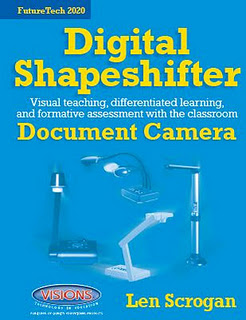
I recently published Digital Shapeshifter, the leading resource on creative teaching with classroom document cameras, and this new blog will become a living extension of that book. (Of course, the book does contain a few sections on the topic of stereo 3D visualization with document cameras.) FutureTalk VIZ is merely a new “startup,” a new blog operating in its own sphere of influence within the FutureTalk brand.
On the other hand, FutureTalk 3D will continue its 3D-in-learning emphasis, with many exciting, ground-breaking, and even controversial topics looming on the horizon. Stay tuned.

December 12, 2011

Comforting Stories


Dr. Dominick M. Maino
In our previous post, we discovered the touching story of Strabby’s journey toward 3D vision. A practicing optometrist and leading vision health researcher, Dr. Dominick M. Maino (OD, MEd, FAAO, FCOVD-A and Professor of Pediatrics/Binocular Vision at the Illinois College of Optometry/Illinois Eye Institute in Chicago, Il) suggests that 3D-related vision problems are common. He crafted a 2010 editorial estimating the number of adults and children in the U.S. affected by what he calls a “binocular vision pandemic”:
“A clinical trial to determine the prevalence of binocular vision dysfunction within the general population suggested the possibility of up to 56% or 60 million men, women and young adults with symptoms associated with a binocular vision (BV) dysfunction, 45 million (61%) with accommodative problems and 28 million (38%) demonstrating various vergence anomalies.” [Study conducted in Spain]

Dr. Maino’s blog is a remarkable read for those who desire to learn more.  He also recommends reading a compelling book by Susan Barry entitled: Fixing My Gaze: A Scientist’s Journey into Seeing in Three Dimensions.

With increased societal exposure to 3D movies, 3D home television, 3D gaming, and 3D education, comforting stories of identification, treatment, and eventual transformation are rapidly spreading.  You see, 3D projected images can now be used as a universal public health screening tool for vision problems that previously went undetected

October 3, 2011

A Hopeful Report


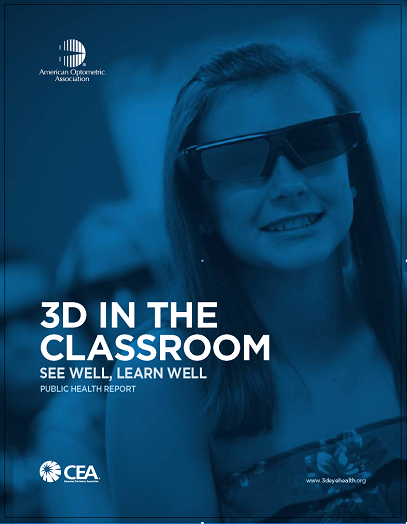
It is important to note that the AOA’s position paper, “See Well, Learn Well.” is considered a Public Health Report. What does that mean? It means that this report carries both consequence and a very hopeful message. It carries consequence in conveying the message that vision matters—in learning and in life. You see, if a child cannot see 3D in the natural world, that child will struggle in reading from an early age—and she will often struggle to see lessons from the back of the room. As she grows older, that same child will be less successful competing in athletics or safely driving a car. Her overall quality of life will narrow, as she will be less able to enjoy the natural world that surrounds her, which is, of course, a 3D world.  The report carries consequence by demonstrating that 3D carries profound implications for improving the nation’s vision health.


The report is also hopeful. It is hopeful because the report suggests that these new 3D technologies offer us a pathway that can lead to more successful educational experiences for our children.  It is auspicious because this technology portends earlier diagnosis of vision disorders. It is promising because it carries with it the remarkable potential for fundamentally eliminating entire generations of eye disorders, such as amblyopia (lazy eye), through early detection.

The message of “See Well, Learn Well” is straightforward. A child is diagnosed with a congenital eye disorder at age five—which is 5 or 6 years earlier than this would normally have been diagnosed. Then there are the stories of those who faced serious academic struggles in school until their natural 3D vision was addressed. The message is not lost on me either. I am legally blind in one eye—the result of childhood amblyopia—so I know what this means at a deeply personal level.

April 4, 2011

A 3D Lagniappe


Question: “What 3D announcement made in March resulted in over half a billion web impressions in just two weeks?”
Answer: The 3D lagniappe.


Lagniappe” is a Cajun term meaning “a little extra,” or a bonus gift. (For example, if you were to receive a free slice of scrumptious pecan pie after ordering the large-sized crawfish etouffee—that would be a lagniappe. Or if, at the end of a workshop, a presenter gave everyone in the room a practical new tip, immediately usable—that, too, would be a lagniappe.)

This metaphor is absolutely the best way to describe what is currently erupting in the 3D world. In a recent announcement, the American Optometry Association took a significant position on 3D viewing, and this announcement has since reverberated around the globe. The upshot is that viewing 3D is strongly encouraged by the AOA.  Viewing 3D—in theaters, on home television sets, on game consoles, and in our nation’s classrooms—appears to serve as one of the most reliable and effective vision screeners ever offered. It’s apparently far more effective than the standard eye-chart test.
Who could have imagined? It’s an unexpected bonus, a “little extra” gift for 3D-using schools. Although we are seeing very positive results in classrooms that are using 3D, now we have a 3D lagniappe—a tremendous health benefit is now associated with this impactful teaching tool.

Take a look for yourself by checking out these national announcements: 


Special Notes:

1.  In mid-May, I plan to populate this blog with a rich series of posts about the learning results and successes we are now seeing in our pilot 3D classrooms.  The 3D lagniappe above is just your appetizer!
2.  Yes, I’ve been serving on the national AOA team that has been developing a position paper on this topic. Our work is expected to be released sometime in June—so please stay tuned!