Showing posts with label simulation. Show all posts

June 19, 2017

Toward Better VR Content

In a previous post (Is educational VRcontent ready for prime time) I tackled the notion of educational content categories for both 3D and virtual reality. I wrote: “…3D educational content came in a diversity of approaches and design--six flavors, if you will,” adding that “contemporary VR content for the education market today still fits clearly into these same lanes.” See my original thinking in the chart below.


Upon further reflection, I knew I was wrong—or at least missing something in my taxonomy.  I refined my thinking and developed this new, improved taxonomy, one specific to educational virtual reality content:


Come back next week for a careful drill down on this new taxonomy.

October 21, 2013

The Tablet Context (4)

In our concluding post in this four-part series, I want to focus on where a tool like the NEO3DO fits in the grand scheme of education.


The Educational Context. In schools, mobility tools like tablets and iPads are clearly the most popular kids on the block. Educational conferences assign an inordinate amount of importance and mindshare time to these devices. In fact, all traditional educational computing has largely become ho-hum in the face of these eye-catching new arrivals. It seems everyone in education wants a piece of the mlearning revolution (mlearning = mobility learning). Although they have not yet replaced laptops and desktops in most schools, tablets and iPads are gaining ground in schools, making their way into pilot projects, shared classroom sets, the welcoming arms of innovative teachers and principals, and the desks of 1:1 schools that can afford them. The context is simple: in today’s educational environments, mobility tools matter.

The Content Context. Although there’s nothing wrong with the NEO3DO tool itself, I was discouraged by the content posture it poses. The company loaded some nice demos and loops for me to explore. That was appreciated. Thanks. But what the company doesn’t yet understand (yet soon will) is that schools have little respect for video, aka movies, flicks, cinema, film, entertainment, Hollywood, features. (A positive exception would be the short, focused video vignettes, like the well-known DesignMate resources.)
Within educational circles, the train has long since left the station in that regard. You will never widely sell a tool to schools on the basis of being able to see videos. Educators today want less passive and more active (interactive) experiences with mobility devices. They want students to be able to create, construct, design, or experience learning with mobility devices. Loops, movies and running demos just don’t cut it for demonstration purposes to educators. Anachronistic artifacts from the past century won’t do this device justice. Instead, we need to see 3D simulations and micro-simulations, 3D serious games, tethered and tightly focused 3D visualizations, and avenues for 3D content creation. (I am speaking specifically of stills, animation, shorts, and narrated machinimas.)  Now, the NEO3DO can do all the right things—but they are not yet loaded on it.


The Competitive Context. I am worried about NEO3DO’s competition. How will this tiny company fair against the likes of Apple, Microsoft, and Asus in school sales? Is autostereoscopic 3D enough to give them an edge? I believe this tool must be bundled with stellar content and steered by brilliant marketing strategy in order to carve a presence into the stubbornly resistant educational market.

November 5, 2012

Spatially Cool

[NextGen 3D Content Series, Part 2]
Our second featured nextgen company is Spatial Thinking, a California-based company with a talented international programming team located in both L.A. and Lebanon. Spatial Thinking is led by its founder, George Dekermenjian, who is a gifted master teacher and active college mathematics professor in his own right. Formed to exclusively serve the education space, Spatial Thinking builds interactive simulations that can be presented in stereoscopic 3D as tools for teaching and learning math for grades 4-12 and college math. Their flagship product is Space Geometry and Measurement 3D (SGM-3D and SGM-S3D). Both versions contain the same content, but the latter (SGM-S3D) is optimized to be viewed in stereoscopic mode while the former is produced in rendered 3D. This approach exemplifies a generally wise strategy for success in the stereo 3D marketplace: offering 2D content as well as 3D content. When schools are ready, the shift to 3D is easy and costs less.
Using 3D to teach concepts that are harder to learn without stereo 3D.
I chose Spatial Thinking as an example of one of my nextgen educational 3D content developers for five main reasons:
  1. This company starts with the premise of the added value stereo 3D can bring to learning; I like that. Spatial Thinking produces simulations that use stereo 3D to an advantage, concepts that lend themselves naturally to 3D visualization. Essentially, that means using 3D to teach concepts that are difficult to learn without 3D.
  2. Spatial Thinking understands the educator perspective as much as they understand the technology of 3D visualization. This company demonstrates an openness to learn and do what schools, teachers, and students want and need, not just pursue the technology for its own sake.
  3. Their content represents a significant move beyond the current hegemony of science content in the 3D educational marketplace—and math is a great place to start.
  4. They are not developing just a few quixotic titles—they are developing quite a few key math concept sims. (You see, if there are not many resources to choose from, my experience is that teachers won’t spend time to learn to use the technology.)
  5. They surround their software with exactly the kinds of supporting materials that teachers are dying for: visual PowerPoint supports, lesson guides, and extension materials.
Topics covered on the “Space Geometry and Measurement” (SGM)
product from Spatial Thinking.
Stereo 3D educational software designed the way teachers like to teach.
In this series, I asked each content provider to explain what was so defining about their approach to 3D content. In designing their software, Dekermenjian noted his desire to “creatively use negative-parallax to highlight key ideas of particular concepts” and importance of “ensuring each lesson/module could be explored in 10 minutes or less, leaving enough class time for reflection, discussion, practice, assessment and review.”

Spatial Thinking’s plans to build additional interactive stereo content for other areas of mathematics, such as analytic geometry, calculus (high-school and college level), and other higher mathematics courses typically offered at the college level or beyond. Spatial Thinking’s web site can be found at: www.spatialthinkingllc.com.


July 16, 2012

3D Magic

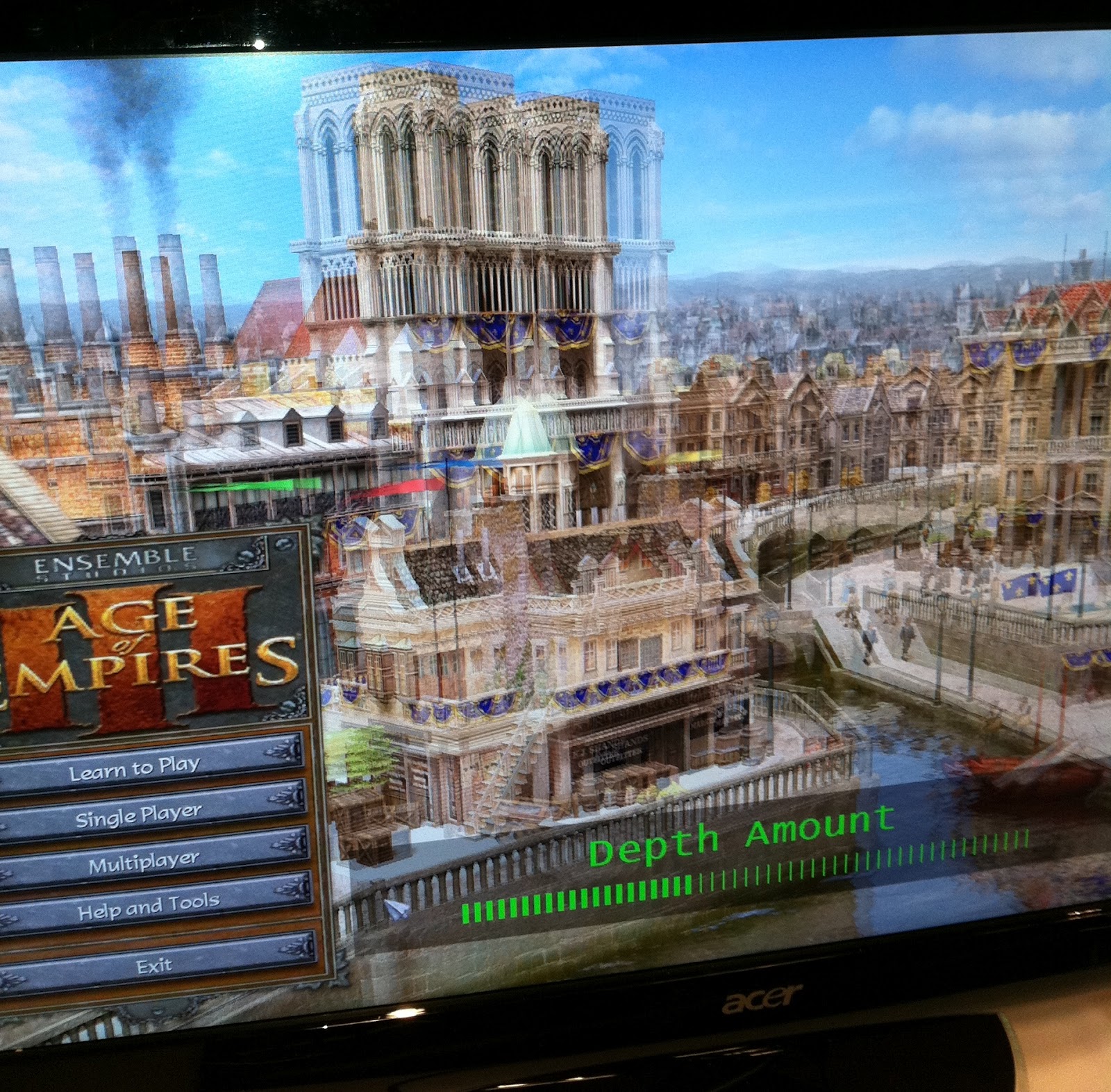
Here’s something useful for educators I learned about last year, but I did not have editorial time in the blog schedule to cover it until now. But it’s worth knowing about. NVIDIA has a product called 3D Vision that can convert traditional PC games—some of them well known off-the-shelf educational games or simulations (in education we often call them “serious games”)—into stereoscopic 3D.

And as you can see from the picture above, it is even possible to increase the depth, or parallax budget, of each scene. It turns ordinary educational simulations into quite immersive experiences. While speaking at the annual research conference at Pacific University’s vision performance institute, I noticed Dave Cook, the chief 3D Vision software architect from NVIDIA, sitting in the audience. I quickly asked him for an interview, which he graciously provided. The interview is provided below. He reveals some new information that few people know about 3D Vision...


May 28, 2012

Leo Is Here


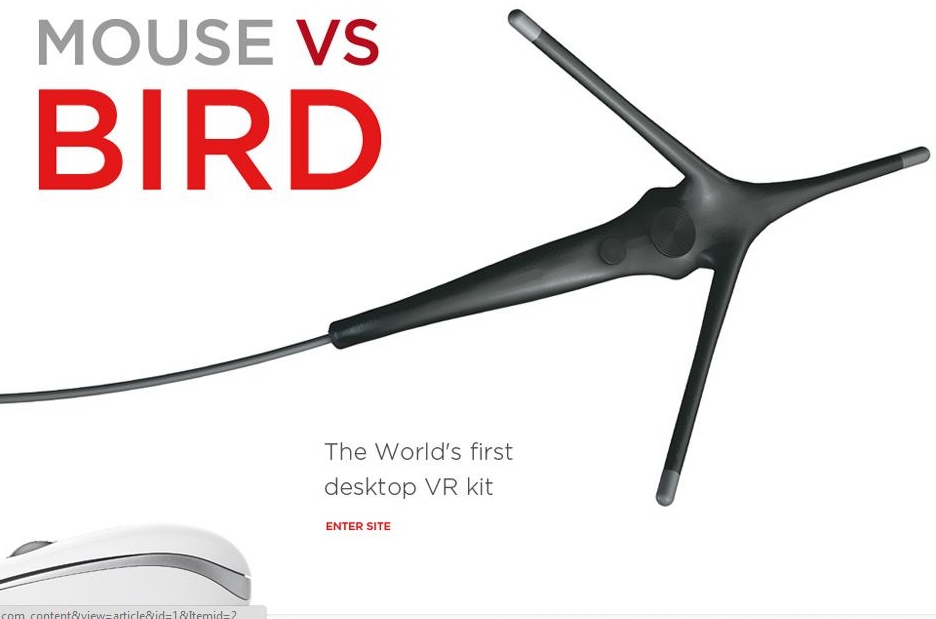
A new 3D tool hit the U.S. for the first time (at both CES and TCEA), Leonar3Do.  Building on the metaphor of the engineering, design work, and creativity of the famous inventor/artist/engineer Leonardo daVinci, this group (and their U.S. reseller) offers a “mixed reality” stereo 3D desktop VR kit.  Check out this video to see how this technology conceptually works.  This company produces “an interactive tool that not only displays, but also integrates into your own personal 3D space.”  It features the bird, a special 3D handheld controller than enables the user to reach, grab, work and play with objects.  Currently, they are offering educational, professional, home, and conference center editions of their product. This tool advances the possibilities for student content creation, especially at the high school, college, and university level. For educators, this tool would make a strong basis for an excellent grant proposal.

February 13, 2012

Spatial Thinking


Over the next few months, I periodically plan to interview some of the educational 3D content developers that are making great strides in producing classroom-ready content. This is the first posting in that editorial line.

This week, we see the release of a new series of secondary-level stereoscopic 3D  math simulations by Spatial Thinking, a Los Angeles-based educational content developer, with a top-rate programming team in Beirut, Lebanon.  Spatial Thinking produces interactive simulations designed to teach difficult math concepts to students using the advantages of 3D stereo visualization. And it works. 

The initial 3D stereo interactives released by Spatial Thinking, with more on the way.
This software was clearly designed with the math classroom in mind, tackling the toughest problems with bravado. George Dekermenjian, the founder of Spatial Thinking, explains: “Our goal was to create an application that would serve as a bridge between the teacher’s mind and the students’ minds.”

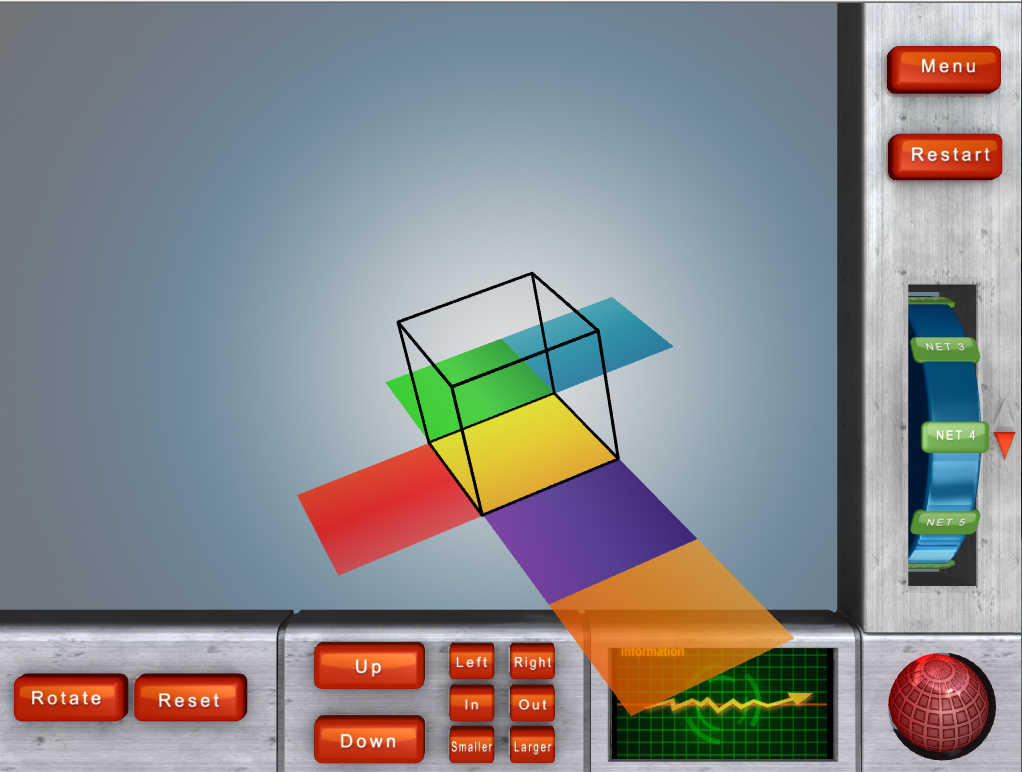
An interactive stereo 3D simulation that can be used by teachers or students to promote deep questioning and understanding of solids and their nets.

Focusing on the mathematics behind space geometry and measurement, the Spatial Thinking math series focuses on the relationships between concepts of geometry that students often feel are unrelated and disconnected. It deploys animations of more than 100+ objects to make learning connections successful for students. Dekermenjian is definitely on track when he clarifies that “any product aimed at teachers and students must be one that inspires discovery, experimentation, and engagement. “ These interactives do just that. No joke. For 3D-using educators, this software is definitely a must see, and portends a bright future for this company. Take a look.

August 8, 2011

3D School Safety (Part II)


In the previous blog post we announced that SchoolSAFE is currently developing a 3D training simulation for school emergency preparedness. Two key questions surface: “Why use 3D to do this and how does all of this fit in with school safety?

By employing 3D video to train schools in crisis response, SchoolSAFE hopes to evoke a strong “training dividend” from the compelling nature of 3D content. John Simmons (johnsimmons@schoolsafetypartners.org) explains that “by viewing brief 3D scenes, trainees can experience a level of stress that will test their ability to manage the incident as they communicate with first responders” while a school threat unfolds in front of them. “3D has such volume,” he reminds us, and that’s why his organization believes this will succeed. Simmons points out that most school emergencies must be addressed by school staff who are 7 to 20 feet away from the action. This corresponds to the distance from the 3D camera where the 3D effect would be most pronounced. And, according to Simmons, synchronizing 3D viewing with live two-way radio drills provides an intense interactive experience not common in the world of entertainment or gaming.

In addition, using 3D offers some economic advantages. Simmons explains "in these tough economic times, this interactive 3D experience brings down the cost of drills and exercises, and offers more opportunities to schedule high-quality training so that all school personnel and students can benefit." These simulations can also help overcome the challenges of teacher turnover and new incoming classes by maintaining a consistent level of training for newcomers year after year.

The goal of this partnership, an effort notably inspired and led by Colorado State Senator Steve King,  is to bring this training to 30,000 school safety personnel and 800,000 students in Colorado, and ultimately to 2.1 million school safety personnel and over 56 million students nationwide.

So how will schools react? Steve Hoban the Director of Operations, Security & Environmental Services for the Boulder Valley School District, is optimistic. “The use of the 3D technology holds great potential in the world of school safety,” he predicts. 3D technology and training simulations represent “an opportunity to be more efficient with training, while still giving the recipient a more realistic feel for the crisis event being addressed,” he adds.

While attending the most recent meeting of Colorado’s School Safety Task Force, Jim Chabin, who is President of the International 3D Society, agreed:

" Using the immersive strengths of 3D media to better present, illuminate and stimulate educational subjects for students, teachers and leaders responsible for their academic success and safety, is an exciting opportunity. Once again, Colorado's community of committed educational stakeholders is leading the entire country in creating more exciting, and cost effective educational tools for this, and our next, generation of students. "

From a partnership perspective, school safety’s entry into the 3D world will bring a variety of players to the table—hardware, integration services, content development, and advertising. From an educational perspective, school safety could be a school district's first reason to invest in 3D classroom technology.

August 1, 2011

3D and School Safety


Think for a second about the community you live in. On any given work day, twenty percent of your community is involved in a K-12 environment. And if you add higher education to this count, the total number of community members actively involved in school locations exceeds twenty-five percent. That not only represents a huge footprint for public safety agencies, but a potential security “blind spot” if schools cannot communicate with them during emergencies.

As a result, SchoolSAFE recently announced the launch of a national 3D television campaign during National Safe Schools Week, October 16-22, 2011. SchoolSAFE has selected School Safety Partners to produce the 3D campaign with input from major 3D technology companies and school districts. The campaign will use live-action stereoscopic scenes and stereoscopic 3D animation, and will be delivered to general audiences, school staff, and students using all available platforms. The campaign will show how schools today must plan for a broad range of incidents and emergencies including: an active shooter, animal threats, bomb threats, a bus accident, chemical spills, earthquakes, fire, floods, food contamination, gas odor, intruders, pandemic outbreak, power outages, tornadoes, and severe winter storms.

SchoolSAFE’s plans offer some interesting content implications. “3D television channels are going to be hungry for product and sponsorship. Since the purpose of a TV channel is to use programing to gather a large audience and deliver it to the advertiser, the advertiser's message has to stand out. If channels are producing eye-popping 3D content, 2D advertiser messages are going to fall flat.” School Safety’s John Simmons predicts the emergence of more and more high-quality 3D advertising to fit in and keep stride with the new 3D content. "If our responsibility is to raise awareness in the community and try to influence public opinion about school safety, then our PSAs should be in 3D as well," Simmons says.

School Safety Partners then plans to create an interesting new mashup. It aims to leverage the impact of 3D with the power of interoperable two-way radio to create a pulsing, semi-live training simulation for school emergency preparedness. It’s interesting to note that the vision and impetus behind this effort comes from Colorado State Senator Steve King, who has a strong record in school safety legislation. 

Revisit our FutureTalk 3D blog next week to learn more details about this hallmark effort.