June 25, 2012

ISTE 2012 Update


Here’s an interesting scoop for ISTE 2012 attendees. On Monday morning, Mayim Bialik, the talented star of Blossom and Big Bang Theory, is presenting at 8:30 a.m. on behalf of Texas Instruments in ballroom 20CD. Dr. Bialik, who has a PhD in neuroscience, is the new TI brand ambassador. She will also make two appearances at the TI booth on Monday, so expect quite a crowd. 
By the way, I spent some time talking to her at a private reception, and let's just say she is scary smart--like so many of the readers of this blog, whom I often meet on the road! Geeks rule. Just saying.

June 18, 2012

3D DocCam Redux


Here’s a timely update on last week’s 3D Document Camera Post. Last week I was at InfoComm 2102 and was able to see the new Lumens 3D document Camera up close and in action. I also found another 3D document camera hitting the market, produced by Wolfvision. Here’s what I found:

Lumens 3D Ladibug. The form factor is attractive and the visualization quality, using a DLP ultra-short throw projector was stellar. This unit will retail in the $700+ range and is well worth the money. Although aimed at the K-20 education market, the quality of image is stunning. It should fit anywhere. 

A science lesson demonstration featuring long-time 3D educator, 
Nancye Blair, using the Lumens 3D Ladibug.
WolfVision 3D Document Camera. This 3D document camera is ceiling mounted and designed for industrial and advanced medical applications.  The model shown was just released and retails for around $30,000. The sales rep was not able to demonstrate it well or answer simple questions about application, so I ended up explaining how it could be used to several University passersby. I also showed the sales rep how this technology is best viewed 10+ feet away, not up close, as they were doing. The latency on the document camera was quite significant, but I expect they will improve upon this problem in future updates.


Demonstrating the WolfVision 3D document camera at InfoComm


June 11, 2012

A 3D Ladibug


Ground-breaking news in the educational 3D world. Lumens recently released their new 3D Ladibug document camera. This high-definition document camera comes 3D-ready for both 3D DLP projectors and 3D TVs. And don't worry, educators!  The 3D Ladibug easily can function as a 2D visualizer, as well! Lumens is a power player in the document camera industry, so this product release is not a trivial matter.
The context of this product release is not trivial within the education market either. A 3D document camera can be used by teachers to showcase immersive science experiments or model math skills through the visual display of manipulatives, tiny ‘blocks’ or shapes that teach place value, fractions, measurement, or geometry—with depth More importantly, the 3D document camera becomes another stout tool for content creation. Imagine student dioramas, stick or finger puppet shows, or model displays—again, with depth. And even primary children can ‘design’ the content. To learn more, take a look at this case study link and the following product data sheet link. You can also see live demonstrations on the exhibit hall floor at ISTE 2012 in San Diego in June. It’s a great time to be alive.

June 4, 2012

3D Comm


For those readers who want to learn more about 3D in the educational marketplace, or simply wish to increase their knowledge about the possibilities and capabilities of 3D, a high-leverage opportunity is coming your way. 3D Comm Seminars are again being offered at this year’s InfoComm conference in Las Vegas on June 13 and 14.

These 90-minute sessions, taught by Insight Media analysts as well as other leaders in the 3D industry, will focus on “providing unbiased information on many aspects of the 3D ecosystem, and help you gain critical knowledge about technology, markets, applications and uses of 3D.” 

The 3D Comm schedule of offerings includes:

Wednesday, June 13
3D1
Introduction to Stereovision and 3D Human Factors
Chris Chinnock
Insight Media
3D2
Advanced Capabilities of 3D Projection
Victor Vettorello
Vista Systems Corp./ Christie Digital
3D3
System Integration for Stereoscopic Solutions
Norbert Hildebrand
Insight Media
3D4
Introduction to Stereovision and 3D Human Factors
Chris Chinnock
Insight Media
3D5
3D in Visualization/Simulation
Andrew Jamison
Scalable Display
3D7
Autostereoscopic 3D Displays for Digital Signage
Chris Chinnock
Insight Media
3D8
3D Applications - Where, What & Why
Norbert Hildebrand
Insight Media 
Thursday, June 14
3D 9
Content Creation for Stereoscopic Displays
Chris Chinnock
Insight Media
3D11
Introduction to 3D Displays
Chris Chinnock
Insight Media
3D12
Remapping for 2012: 3D and the Education Market Space
Len Scrogan
University of Colorado-Denver
3D13
Deploying 3D Displays Using Touch, Gesture and Motion Tracking Technologies
Kurt Hoffmeister
Mechdyne

As you can tell, I am one of the presenters. I will be speaking about Remapping for 2012: 3D and the Education Marketspace. My focus will be on three key topics:

  • “What does great eS3D look like?”
  • “How can the industry best prepare for the 2012-2013 academic year in the educational marketplace?“
  • “What changes and developments must be considered in order to reach and succeed in the educational market?“
Please join me if you can, and take time to shake hands and chat one-on-one. You can get more information about 3D Comm at this link.

May 28, 2012

Leo Is Here


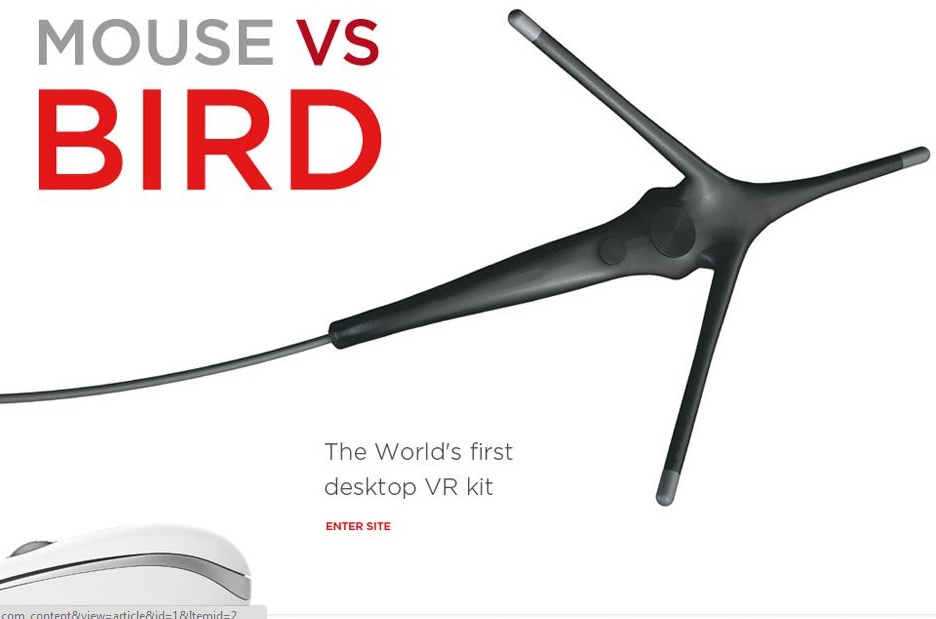
A new 3D tool hit the U.S. for the first time (at both CES and TCEA), Leonar3Do.  Building on the metaphor of the engineering, design work, and creativity of the famous inventor/artist/engineer Leonardo daVinci, this group (and their U.S. reseller) offers a “mixed reality” stereo 3D desktop VR kit.  Check out this video to see how this technology conceptually works.  This company produces “an interactive tool that not only displays, but also integrates into your own personal 3D space.”  It features the bird, a special 3D handheld controller than enables the user to reach, grab, work and play with objects.  Currently, they are offering educational, professional, home, and conference center editions of their product. This tool advances the possibilities for student content creation, especially at the high school, college, and university level. For educators, this tool would make a strong basis for an excellent grant proposal.

May 21, 2012

ISTE 3D Preview


The ISTE 2012 educational conference, scheduled for San Diego in June, is offering four powerful educator presentations in the area of stereo 3D. Make plans to be there and learn about the latest in stereo 3D DLP technologies for the classroom. Click on any link to learn more.

When 3D Comes to Your School
Saturday, 6/23/2012, 12:30pm–3:30pm
Presenter: Len Scrogan, University of Colorado-Denver
This is a comprehensive three-hour workshop on everything you need to know about creating a stereo 3D classroom or pilot project in your school or district.
3D in Education
Tuesday, 6/26/2012, 5:00pm–6:15pm
Nancye Blair, McKeel Elementary Academy with Len Scrogan
This is a birds-of-a-feather gathering for teachers or leaders interested in learning or talking about teaching with stereoscopic 3D. It is an open-ended discussion focusing on emerging resources and best practices for using 3D technologies to increase student engagement and learning gains.
Exploring 3D Technology in the Classroom: Strategies and Lessons Learned
Tuesday, 6/26/2012, 1:00pm–3:00pm
Carole Hruskocy, Regis University with Sandra Foster
How does 3D technology in a science classroom affect learning and teaching? Explore this emerging technology and find out the results from a third-year extension of the BVS3D research study, presented by University researchers in a two-hour stay-as-long-as-you-want poster session.
Teaching in 3D: Why It Works, Why It Matters
Tuesday, 6/26/2012, 10:00am–12:00pm
Presenter: Len Scrogan, University of Colorado-Denver
Discover how stereo 3D visualization technology is being used effectively in K-12 classrooms, how it affects student thinking and performance, and why it matters. Presented in a two-hour stay-as-long-as-you-want poster session. 

May 14, 2012

3D@Conferences


After attending FETC in Orlando, TCEA in Austin, and COSN in Washington, D.C., I came away with a fresh wind of perspective as the 2012 ed-tech conference season began in earnest.


Learnings from FETC

Stereo 3D was not well represented.  It was visibly on display only in two booths.  In addition, the displays were not that effective. Self-running demo loops simply won’t excite educators.  There are better ways to showcase stereo 3D capabilities, folks.
Stereo 3D is not well understood by conference leadership.  Although chosen as a presenter, none of my stereo 3D offerings were selected.  That decision perplexed me, so I wrote to the conference leadership asking why they did not select one of my 3D presentations.  “We already had several 3D presentations scheduled,” they claimed, and “didn’t see the need for any more.”   The answer was mystifying, but I accepted it at face value.  Who could possibly be presenting?  Fast forward.  The conference arrived.  Once I landed in Orlando, I took thirty minutes and reviewed every session offered during the conference, scouting for the previously mentioned stereo 3D sessions.  There were none.  But there were indeed three sessions being offered on “3D virtual worlds” (rendered-3D immersive worlds, like Second Life) and rendered-3D design tools, or rendered-3D animation.  But nothing on the visualization and learning advantages of using stereoscopic 3D.  As you can see, the conference leadership did not understand what stereo 3D is.  Why? It is not fully a part of their generation or their personal culture.  It is not yet on their radar.  It should be, but it is not.  But don’t ever think it is an unreachable goal.  We just need the right messaging.

Learnings from TCEA

Texas “gets” 3D.  Numerous sessions touched on 3D at TCEA, including a half-day workshop. The presentations were well received and packed with people.  New 3D math and science content was demonstrated that convinced even the stoutest doubters.  3D content was visible in a number of projection manufacturing and reseller exhibits. DLP 3D Lamp-Free Projectors were all the buzz, with four projector companies featuring DLP lamp-free projectors.  (To the educator, lamp-free means not paying for bulbs every year—at $350 a whack.  These projectors cost a little bit more, but pay for themselves in a year and a half. In some cases, the solution was expected to last for 20,000+ hours, or 10+ years in school terms.)  I saw models from Vivitek, BenQ, Casio, and Optoma.  Again, Texas ‘gets’ 3D.

Learnings from COSN

3D is the new kid on the block. A conference for technology leaders, 3D was clearly a new experience for most. Amidst the clamor and noise of cloud-based applications and 1:1 initiatives, folks who saw examples of great 3D educational content were quite impressed. Some of the discussions I had with interested educational leaders were promising.  Educational technology leaders simply need to see great examples of 3D (not movies), in order to begin their journey towards understanding.  

May 7, 2012

Think in 3D


The Panasonic HDC-SDT750 3D Camcorder

Some 3D educators are purchasing 3D video cameras these days, like the low-cost Panasonic model shown opposite, so that students can begin to make their own 3D content. This arena will be an increasingly important category of 3D content development in the future—student-created content. So, when asked by 3D educators to recommend a resource guide for teaching tips on how to film in 3D versus 2D, I can easily recommend a new book by 3D expert Clyde DeSouza. The book is called "Think in 3D.” It is quite easy to read, practical, and offers easy entry into this field. In particular, Think in 3D” offers worthwhile educational and psychological insight about the effective use of the 3D medium.

Think in 3D
The kindle version can be located at: http://amzn.to/zKTb8c 
The paperback version can be found at: http://amzn.to/x3ryUq 

April 30, 2012

School Safety Update


The largest hands-on school safety exercise ever staged anywhere is taking place on May 2, 2012, in Pueblo County, Colorado—and with a 3D twist.

This crisis exercise will simulate a high-wind school building collapse resulting in a complex evacuation of 450 children, and the coordinated response efforts of 400 adults. If you’ve ever visited Colorado, you know the meaning of high winds.

This large-scale activity is custom tailored for major video production. The school district is providing three primary shooting locations, the school buses (for the evacuation), the school and district staff as actors, the children (with parental releases), and a new mobile communications unit designed by SchoolSAFE Communications. The county is providing first responders as actors from fire, law enforcement, and emergency management, as well as 5 ambulances, a rescue helicopter, fire equipment, and other public safety vehicles. All local media organizations will also participate, many providing reporters and news crews as actors in the simulation. VIP observers from across the state, coordinated by State Senator Steven King’s office, will observe the exercise and draft a final report. Funding for this activity was provided by the Federal Emergency Management Agency and the U.S. Department of the Army.  For further information, you can feel free to contact: johnsimmons@schoolsafetypartners.org

Now comes the 3D part. School Safety Partners and Panasonic will capture the entire event in stereo 3D, with the intent of producing classroom-based simulations and training segments for the school safety market. There remains a strong and burgeoning role for stereo 3D in school safety and emergency preparedness training.

April 23, 2012

Wanted Again: 3D Educators

The Opportunity
Presente3D, an innovative startup company, is looking for insightful educator feedback on their product. Presente3D enables 3D content creation through a truly easy-to-use and extremely flexible ribbon bar add-on to PowerPoint 2010. Their tag line is "taking 2D PowerPoint into the Third Dimension." It enables the educator, e-trainer, or student to turn their presentations into a 3D format, but more importantly, to turn any graphic or chart within a PowerPoint into a 3D object that can be manipulated in space and depth.

If you are interested in exploring this tool, you own PowerPoint 2010, and can provide in-the-field practical feedback as an educator, visit Presente3D's website to sign up for their 3D PowerPoint Beta program. If you want to contact them directly, do so at this email address. 


April 16, 2012

Wanted: 3D Educators

The following opportunity is being offered by the stalwart 3D company, Eon Reality

Apply to the International 3D in Education Program.
EON Reality is hosting a competition in which 30 schools from around the world (5 in North America, 5 in South America, 5 in Europe, 5 in Asia-Pacific, 5 in the Middle East, and 5 in Africa) will be selected to participate in the International 3D in Education program. Tell them how your school will use interactive 3D content in Education: the 30 best applications will receive a one-year license for interactive 3D content creation software that enables teachers and professors to create their own 3D learning applications and to use interactive 3D in their classroom. Download the application form at http://tinyurl.com/EON-3D-Education-Competitionand send it back to education@eonreality.com before April 30.

April 9, 2012

Opportunity Calls

This is a message primarily for 3D technology companies (hardware and software manufacturers, integrators, and resellers).

The Opportunity
You are invited to participate in a dynamic optometric educational session at the American Optometric Association's annual conference, being held in Chicago on June 30th, 2012. The details of this opportunity are detailed in the document embedded below, along with contact information.

                                    Open publication - Free publishing - More 3d
The Business Case
There are two distinct benefits associated with this opportunity:
First, this is an opportunity to reach an elite group of consumers and their families. Optometrists are in the top 12.5 percent of households per total money income according to U.S. census data and the AOA’s Income from Optometry survey.
Second, this event also represents an opportunity to make sure doctors of optometry are sharing the message you would like consumers to hear—not only that 3D/S3D viewing is a safe and appropriate technology for all audiences, but that it can also uncover treatable vision problems.

Why It Matters
In 2011, efforts to increase awareness of the health benefits of 3D viewing resulted in more than a billion media impressions. But according to the AOA’s 2011 American Eye-Q® survey, there is still work to be done dispelling myths. Parents still reported some concern about the effects of 3D technology, with:
  • 53 percent of respondents, whose children are 18 or younger, believe 3D viewing is harmful to a child's vision or eyes 
  • 29 percent feel very concerned that their child may damage their eyes due to prolonged use of computers or hand-held electronic devices 
Don’t miss this chance to ensure your message reaches consumers through the collaborative strength of the American Optometric Association (AOA) and 3D@Home consortium. 

April 2, 2012

On Youthful Shoulders

I think DLP-enabled 3D will definitely be carried into the future on the shoulders of kids. Kids get it. Adults, still not so much. Why do I say that? Three reasons. See if you agree with my logic. And please comment if you have time.


Reason 1. Kids pressure adults. While attending the CIO Summit in Fort Lauderdale this year, I had some separate conversations with a superintendent from a large school district on the east coast and his entourage (all technology staff). Although 3D was nowhere on the radar of his technology staff, the superintendent, in a separate discussion, was very interested in creating a DLP-enabled 3D pilot project in his district. I asked him why. He explained that his 4th grade daughter thought it was cool. (I gave him several 3D stickers for his daughter.)
Reason 2. Kids pressure adults. The notion that students appreciate what 3D has to offer was amplified in the last Speak Up survey, an annual national research project produced by Project Tomorrow, which surveys K-12 students teachers, teachers, parents, and administrators.  When asked what types of digital content students perceived as important to make available in e-textbooks, students included access to 3D content as one of their top choices. Middle school students, in particular, rated access to 3D content higher than all other grade levels surveyed. Interestingly, we know that 3D content can also play a major role in four out of the remaining five of the preferred e-textbook characteristics identified in this chart (virtual labs, video clips. games, and animations/simulations).
Figure 1. Project Tomorrow (2010). Empowering Digitally-rich Content through the E-textbook.
Speak Up 2010 Survey. Reprinted with permission.
By the way, Project Tomorrow is a wonderful resource to help you understand what educational stakeholders value in both the present and future, so be sure to visit their website frequently.  You may even want to consider sponsoring a future report.
Reason 3. Kids pressure adults. Scorsese made the film Hugo in 3D because a) his wife wanted him to make something his kids could actually see, and b) his own 12 year-old daughter and her friends asked “In 3D, right?” See Scorcese’s own comments at the 3D Society Creative Awards:
What’s the bottom line? Young people readily connect with the visual, mobile, and social technologies that so permeate our modern lives. Now if only the adults will listen…

March 26, 2012

A BVS3D Research Update


This information was recently published as a comment in my two-part series comparing the U.S. and European research in the area of DLP-enabled stereo 3D. (See A Parallel Universe, Part I and Part II.) It is such valuable information, I wanted to dedicate an entire post just to the preliminary data being reported, along with some context.

Following the BVS3D year-and-a-half case study evaluating the effectiveness of DLP stereo 3D in Colorado (see tag trail), continued research efforts did not cease. Under the watchful eye of Kristin Donley, (she is the Colorado 2012 Teacher of the Year, a high school science teacher, and the science research coordinator for the Boulder Valley School District), the study was continued for another year in order to tackle one of the most important challenges we often hear about 3D in classrooms: “How do we tease out the advantages of visualization in 2D versus visualization in stereo 3D?” In her posting, Donley noted:

“I am currently looking at the data of the next step in the Regis University/BVSD partnership in evaluating the effectiveness of 3D. This time we tried to focus on the differences between 2D images and 3D images. I taught an abstract concept such as DNA Replication and protein synthesis. Students in the control class only saw 2D pictures and animations. The experimental group received 3D animations instead. Keeping with previous results, I didn't see a difference in multiple choice averages, but did see increased higher-level thinking and detail in the experimental group's essay writing. I also did a video assessment. I had students use manipulatives (tinker toy set to build DNA and represent other molecules) to explain the process of DNA replication, for example, and they used their cell phones or iPods to tape their mini-movies. Students who had the 3D were better able to put molecules in relationship to one another in the 3D space and they had a higher level of understanding of the processes. They included more details in addition to just relating terms and steps of the process. The class with the 3D received a half-a-grade higher average on their essays and there were less misconceptions evident in their video assessments. We just finished focus groups and I am now going through the multiple choice to see if there is a difference in the types of multiple choice that the control and experimental group students missed.
I appreciate Kristin and Regis University going the extra mile with our original research on DLP-enabled 3D in the classroom by extending the study an additional year. Expect a full report at the ISTE conference in San Diego, since I know the Regis University researchers are presenting there. Stay tuned…

March 19, 2012

The Eyes Have It


On June 6th and 7th, the Vision Performance Institute is offering a seminal 3D educational experience that will be of interest to 3D educators, software developers, hardware manufacturers, and literati alike: their 6th Annual Research Conference


This conference will feature topics such as
  • vision ergonomics
  • defining 3D content quality
  • vision care
  • S3D in the classroom
  • S3D in public health
  • and much more
At the conference, I will be moderating a panel, but will also offer an informative presentation on what is different about educational 3D content (eS3D), exactly how we use it in the classroom, what the research is suggesting to us, and key research questions your organization should examine in future case studies.
I strongly encourage the audience of this blog (and especially our strong international audience) to find a way to attend this conference. It will lend a competitive advantage to all of your hard work and efforts in this field. Below is the flyer. I hope to see you there.

March 12, 2012

In Méliès Shadow: A Gripping Story, a Hidden Allegory

Hugo (see the previous post) is the tale of a young lad trying to find purpose in his life following the untimely death of his father. But nestled within the plot is a unique story-within-a-story, a look at the budding history of early cinematography.


The view is through the eyes of Georges Méliès, a “special effects” cinematographer who was immensely popular and productive, producing well over 500 films in his day. A performing magician turned cinematographer, Méliès somehow never left behind his gift for magic, invention, and imagination as he pursued making movies. “I was convinced it was a new kind of magic,” he said of cinema.

Now, here’s where DLP-based stereo 3D comes in. This enchanting tale of the inchoate history of cinema creates a softly hidden allegory of today’s emerging 3D educational marketplace. The parallels are striking. Much like early film, 3D today seems like a “new kind of magic” to consumers and schools alike. “Movies are like seeing dreams in the middle of the day.”  I can’t think of a better way to describe 3D in the theater or the classroom. ”It was a gift!” Méliès voiced with delight about moving pictures. I see 3D in the same role—it’s a gift for learning and for healthy vision.

Moreover, viewer reactions to these early films then (and 3D movies or classrooms now) are eerily similar. In Méliès’ day, people responded with the same “it’s like being there” delight and physical reactions. One of the scenes depicted in Hugo involves a famous moment in film-going history, the brief screening of the Lumière brothers' Arrival of a Train at La Ciotat. Here’s a second YouTube version of the same film clip. Frankly, the visual surprise reenacted when the audience in Hugo saw this short video is no different than the reactions repeatedly evidenced in classrooms of elementary school students as 3D asteroids whizz by their heads on a simulated journey to the solar system. And it’s really not much different than the delight and connection demonstrated recently in Colorado and again in Austin by groups of adult K-12 educators at one of my 3D workshops. I guess there is one difference. The surprise and cognitive delight of viewing 3D does not seem to go away over time.


Méliès Shadow 
The similarities between the first years of moving pictures and our early experiences with stereo 3D don’t stop there. We see in both counterparts the struggles of the early years of making quality productions, the challenges of making a living on the basis of selling something as silly as imagination and wonderment, and the highs and lows of convincing others as to the true potential of the tool.

In Hugo, the magnificent and enthralling “world of imagination” created by Georges Méliès and others was driven away when World War I came. “Youth and hope were at an end,” lamented Georges. “The world had no time for magic tricks and movie shows… no one wanted my movies anymore.” “Happy endings only happen in the movies,” he added hurtfully. Due to the lack of demand for movies, he sold his company. Crushed and demoralized he invested all that he had left in a small toy shop. He felt that, in many ways, movies were just a fad. And the fad was over. 

Sometimes I feel the same way about 3D in education. What has become known as our ‘great recession” has hit manufacturer, software designer, and educational customer alike. At times, it seems like the economy has inopportunely slowed one of the most brilliant innovations of our time. Schools and universities that should be investing heavily in 3D learning technologies are instead focusing on keeping staff on the payroll. The critics of 3D are calling it either another fad or a luxury that cannot be afforded during tough times. Although I don’t want to ruin the movie, let me suggest that, in the end, Georges finds fresh legs. And in the 3D educational marketplace, there is reason for hope as well. You see, the educational market is resilient. It will bounce back. No, the message for DLP 3D’s potential in the classroom is not going to wither away. It will soon find fresh legs.