September 24, 2012

Panning for Gold (Part 2)

As we continue prospecting for 3D gold, here are two more flakes I found in the gold pan as our hot summer came to an end:

e-Animations Comes Out to Play
A new and promising stereo-3D educational content producer started exhibiting their wares in the U.S. this summer: e-Animations. Based in Hungary, this company has a lot to offer, including exceptional artistry and reasonable pricing. You can preview some of their animations (in 2D) here on VIMEO.

New Active Glasses for Education
XPAND leaders were in the aisles and byways at most conferences this summer, visiting various booths and some of my presentation sessions. They were also showing (in one-off settings) their latest active glasses for the education market, the EDUX 3 series. These new glasses offer a TN lens (clearer, with no green tint), CR2032 replaceable batteries (which can be purchased from any store), folding arms (for better storage and fit), and an on-off switch. Distances for viewing and durability remain a high plus for these glasses, and the price has been lowered significantly from last year. I expect XPAND to remain strong in the education market with their continuing commitment to continuous improvement and price reduction.

***
Do you have a new product for the education market or are you updating a previous product? Do you have an interesting story to tell? If so, please contact me for an interview.


September 17, 2012

Panning for Gold (Part 1)


Gold panning takes patience. A gold panner looks for placer deposits, fills the bottom of his/her favorite pan with anticipation, and then meticulously manipulates the pan to filter gold from the heavies and black silt that layer the dark bottom ridges of the gold pan. It’s not easy work, but it can be rewarding, given the staggering price of today's gold.
Gold panned recently in Colorado
by my son-in-law

Gold panning for great technology is no different. During difficult financial times, it’s not easy to find real nuggets, those bold counterstrokes of innovation and potential that can produce glimmers of hope in a tough market. In the next three consecutive posts, I'll highlight a few of the new 3D-related products that bounced across my preternatural radar this summer.  
Here's the first revelation, and it's quite interesting: Optoma offered a wonderful idea this summer. They showed how to use an ultra-short throw DLP 3D projector, along with interactivity, to create a unique interactive tabletop display surface. For a live demonstration, see this video
It’s basically an interactive whiteboard, with 2D or 3D, on any tabletop surface. This makes a lot of sense for schools, learning centers, museums, and other spaces that like to conduct smaller, more personalized tabletop simulations or exercises. It even makes sense for school and emergency preparedness training for small group training. I expect this approach to really resonate with educators. Think about how you might apply this idea in your own setting.

September 10, 2012

Teaching with Depth

Grasping for words. In search of just-the-right language. Looking for richer metaphors. These best describe what has been occupying my think time in recent months. You see, the expression ‘3D’ carries a lot of unwanted baggage. 

For most, the expression ‘3D’ conjures to their minds little more than movies—‘pokey’ entertainment.  Some people immediately associate the term ‘3D’ with architectural drawings (CAD), Google Earth, gaming, or other types of “rendered 3D” objects or scenescapes. Then there’s a well-known film critic, who speaks for many, in suggesting that “‘3D—it just makes me sick.” (He was unaware of the research findings that indicate his discomfort is caused by underlying vision issues, which are easily addressable. But that’s another story.) For many others, ‘3D’ is simply not a part of their generation and therefore not on their radar.

Using the term “stereo 3D” doesn’t seem to help either. Adding that double-fisted adjective merely adds a pinch of technophobe seasoning to the mix. No, I’ve been looking for a kinder, gentler pathway. So far, I have settled on the following:
Teaching and learning with DEPTH is a pleasant way to describe how we use 3D in educational settings. It’s an expression that is, at once, both hopeful and free of the past, largely unwarranted, baggage. So far, it seems to resonate well with educators and educational conference leaders. 

Do you have any similar musings? Other ways to word the notion of the 3D experience? Please post them as a comment below.

September 3, 2012

FutureTalk Expands


FutureTalk 3D has been doing very well, thanks to your committed involvement as readers.  Thank you so very much! This blog is now reaching 2,300 web impressions a month, with our readers coming from nearly every country in the world. That’s quite exciting for a blog dedicated solely to the emerging role that 3D is playing in all spheres of the educational enterprise (including K-12, university, optometric, medical, industry, and even patient, customer, and sales force education).

 
And just so you know- so that you don’t get confused—we are expanding the FutureTalk concept to incorporate a new blog called FutureTalk VIZ. This new blog has the same moniker—FutureTalk—but is not focused on 3D. It is instead dedicated to the world of classroom visualizers or document cameras

 
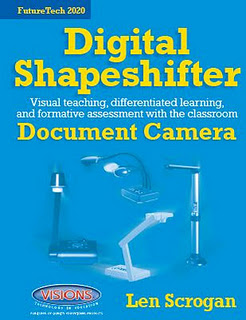
I recently published Digital Shapeshifter, the leading resource on creative teaching with classroom document cameras, and this new blog will become a living extension of that book. (Of course, the book does contain a few sections on the topic of stereo 3D visualization with document cameras.) FutureTalk VIZ is merely a new “startup,” a new blog operating in its own sphere of influence within the FutureTalk brand.
On the other hand, FutureTalk 3D will continue its 3D-in-learning emphasis, with many exciting, ground-breaking, and even controversial topics looming on the horizon. Stay tuned.

August 27, 2012

3D Vision Basics

The 'old' way
The 'new' way

If you are a bit unfamiliar with the role of 3D in supporting vision health and improved learning for children, you may want to watch this short video of James Sheedy, O.D., Ph.D., explaining how 3D viewing helps diagnose vision problems. It was filmed in Chicago during the American Optometric Association’s annual membership conference. It also addresses the importance of our natural 3D vision in successful student learning.

Also, watch the rough video below to see an example of how TrueVision uses 3D in eye surgery education to show clarity and depth:

August 20, 2012

3D Vision News

For the first time in history, the Opening General Session for Optometry’s Meeting® in Chicago in the last week of June featured an educational 3D experience led by a number of Hollywood dignitaries. The audience included attending doctors of optometry, students, paraoptometrics, and their families. (For perspective, there are over 60,000 optometrists in the United States alone.)
At the opening session, 3D experts Jim Chabin (president of the International 3D Society), Buzz Hayes (senior vice president and executive stereoscopic 3D producer for Sony 3D Technology Center at Sony Pictures Entertainment), Graham Clark (StereoD, LLC), and Bob Whitehill (stereoscopic supervisor at Pixar Animation Studios) demonstrated and explained the concepts of 3D as it pertains to the entertainment world. They showed 3D clips from films such as “The Lion King,” “Rise of the Guardians,” “Spiderman” and “Titanic”, among others. Many of these clips have never been seen outside their studios. 
Jim Chabin, president
of the International 3D Society
Jim Chabin, the president of the International 3D Society, stated “We ask your help in making sure stereo deficiencies are corrected.” Chabin continued, “We hope amblyopia rates can be reduced and decimated. We hope your practices can provide appropriate diagnoses. You are important partners in 3D; you are the first responders.”

Why was this event so important? Simply stated, the science behind stereoscopic 3D is an essential step to increased understanding of 3D and stereoscopic 3D (S3D) viewing as a safe and appropriate technology for all audiences.  As the popularity of 3D rises, so too will optometry’s responsibility to educate the public and assist the production studios and other 3D developments. As Jim Chabin suggests, optometrists are the nation’s 3D “first responders.” For that reason, this opening session was clearly a landmark educational opportunity.

The Opening General Session was followed by a number of educational sessions focused on the topic of 3D vision/diagnosis/treatment, along with a very comprehensive Saturday symposium on the 3D experience.  During the Saturday symposium, optometric professionals had the opportunity to take a journey through the entire process of 3D, plus experience the first-ever live, heads –up, 3D slit lamp exam demonstration (a diagnostic technology developed by TrueVision). Anthony Lopez, a 3rd year student of optometry was in the audience and was fortunate to be the “first ever optometry student” to experience a slit lamp exam using this new 3D technology. There is clearly a promising role for 3D in the world of optometric diagnosis and treatment. 

August 13, 2012

Summer 2012 eS3D Content Update


Below please find my Future-Talk 3D August 2012 list of producers of 3D educational content. These content producers are listed in alphabetic order, along with a few salient comments that are worth a look. Links are provided and the entire file is downloadable. If you are a 3D educational content manufacturer, and you are not yet on this list (but would like to fill me in on your intentions), please contact me directly.

                                    Open publication - Free publishing - More 3d


August 6, 2012

eS3D Content Grows


Everywhere I go, the first question educators and industry leaders ask me about 3D in education is entirely predictable: “What kind of content is available in 3D?” On LinkedIn and other websites, the same question endlessly churns on throughout the year. Here's the answer. Twice a year, I release a special report on stereo 3D content available specifically for the educational market. I call it educational stereo 3D or eS3D for short.

I started reporting my comprehensive list in January, 2010. My first report highlighted seven software companies producing stereo 3D content for the educational market. That’s all we could find at that time. Something interesting has happened along the way. Today, two-and-a-half years later, our awareness of the number of 3D educational content publishers has grown to twenty-five. That’s more than a 350% increase. And it’s still growing. Please remember—with most of this content, we are not talking about “3D movies.” In fact, 3D educational content represents a diversity of approaches and design. (See my chart below, clicking on it to expand the view.)


Another interesting development to watch is the increasing emergence of more content for the elementary classroom.

Come back to Future-Talk 3D next Monday for my Summer 2012 posting of 3D educational content producers. Next week, I will post the complete downloadable list of content producers, listing each in alphabetic order with links to the best spots in their web pages. What a great way to start the school year!

July 30, 2012

Looking Back

In the light of the recent tragedy in Colorado, I thought it appropriate to quietly revisit three previous Future-Talk 3D blog posts that touch upon the role of stereo 3D in emergency preparedness education.


These three posts sadly take on new meaning and relevance in the light of the past Colorado shooting tragedy. In a future post, I will update our readers on major Panasonic initiatives in this arena.

July 23, 2012

Broken Hearts

In honor and memory of the victims and families of the recent Colorado theater shooting. We are saddened by the loss of life and unnecessary suffering of innocents. Our hearts are broken.

This blog will return to its regular schedule next Monday.


July 16, 2012

3D Magic

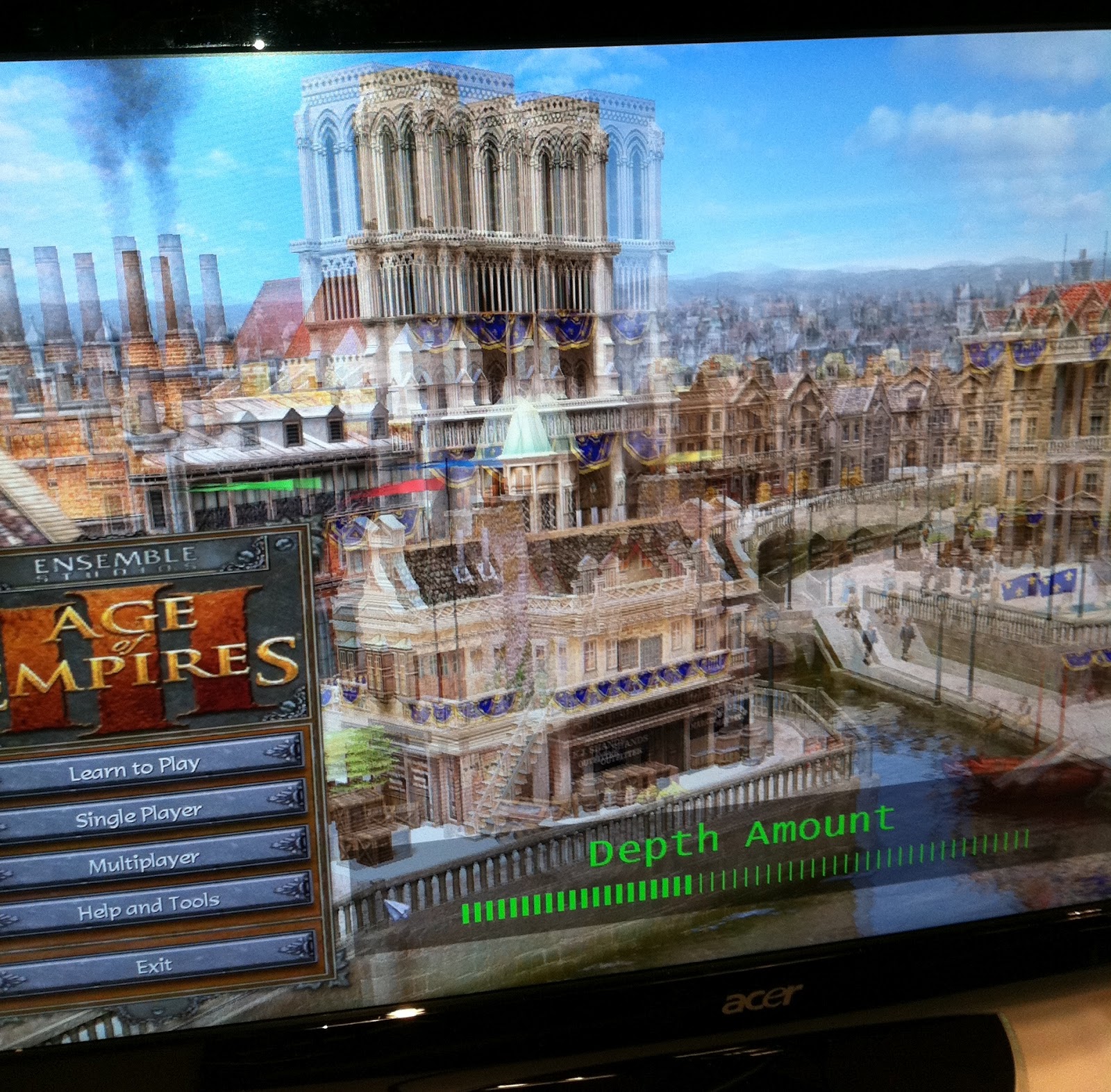
Here’s something useful for educators I learned about last year, but I did not have editorial time in the blog schedule to cover it until now. But it’s worth knowing about. NVIDIA has a product called 3D Vision that can convert traditional PC games—some of them well known off-the-shelf educational games or simulations (in education we often call them “serious games”)—into stereoscopic 3D.

And as you can see from the picture above, it is even possible to increase the depth, or parallax budget, of each scene. It turns ordinary educational simulations into quite immersive experiences. While speaking at the annual research conference at Pacific University’s vision performance institute, I noticed Dave Cook, the chief 3D Vision software architect from NVIDIA, sitting in the audience. I quickly asked him for an interview, which he graciously provided. The interview is provided below. He reveals some new information that few people know about 3D Vision...


July 9, 2012

3D Olympics

We have definitely come a long way in our collective 3D journey. To corroborate my point, let’s take a reminiscent side trip to the dusty annals of this blog’s past.  During the last Winter Olympics, I posted the following post on Future-Talk 3D, The Olympics in 3D.  3D TV was relatively new then. Yes, the 3D movie avalanche had begun, but its future remained still largely in doubt. The 3D experience was still confusing to me. At that time, I was not sure how to compare stereoscopic 3D with its rendered 3D cousin.

Now brush off the cobwebs and fast forward to the 2012 Summer Olympics. No doubt here. Panasonic is a worldwide Olympic partner and is sponsoring the first Olympic games shot live in 3D. Stereoscopic 3D. You can learn more about this hallmark effort here. Laughingly, my older post represented only a wistful glimmer of what was to come. But I am no longer disappointed. The summer games start soon, so I am revving up my home 3D TV (a Panasonic VIERA 3D TV) to catch the action. Will expanded school and university use of 3D be next on the plate? I think so. 

July 2, 2012

Vision Health News


Here's some timely 3D vision health news from around the country:

Have you seen your optometrist lately?

VPI Research Conference Held. The Vision Performance Institute of Pacific University launched a major symposium focused on 3D vision health. Their 6th Annual Research Conference, was held in Oregon early June, and was entirely focused on providing current vision health information to researchers, medical folks, manufacturers, developers and practitioners alike. I spoke at this event and will share some interesting findings in a future post.

American Optometric Association. The AOA 2012 Optometry’s Meeting was held in Chicago at the end of June, offering four major sessions on 3D vision. The last session was a full day mini-conference called “The 3D Experience: Your Opportunity.” The AOA is getting serious about reaching their own ranks, as well as incoming optometry students, as they launch a two-year effort to spread the positive and important public health news. And the good news is: the seminars were packed with pre-registrations! That's very good news.

COVD 2012. Visual therapists (COVD) are also lining up to provide key educational sessions focused on 3D viewing and the use of 3D in treatment therapies at their annual conference, being held in August in Texas. 

If you are missing the context of previous posts on the topic of 3D and vision health, here are the basics: viewing 3D—in theaters, on home television sets, on game consoles, and in our nation’s classrooms—appears to serve as one of the most reliable and effective vision screeners ever offered. It's apparently far more effective than the standard eye-chart test. You see, 3D projected images can now be used as a universal public health screening tool for vision problems that previously went undetected. See this post for information from the American Optometric Association about the benefits of 3D vision.

June 25, 2012

ISTE 2012 Update


Here’s an interesting scoop for ISTE 2012 attendees. On Monday morning, Mayim Bialik, the talented star of Blossom and Big Bang Theory, is presenting at 8:30 a.m. on behalf of Texas Instruments in ballroom 20CD. Dr. Bialik, who has a PhD in neuroscience, is the new TI brand ambassador. She will also make two appearances at the TI booth on Monday, so expect quite a crowd. 
By the way, I spent some time talking to her at a private reception, and let's just say she is scary smart--like so many of the readers of this blog, whom I often meet on the road! Geeks rule. Just saying.

June 18, 2012

3D DocCam Redux


Here’s a timely update on last week’s 3D Document Camera Post. Last week I was at InfoComm 2102 and was able to see the new Lumens 3D document Camera up close and in action. I also found another 3D document camera hitting the market, produced by Wolfvision. Here’s what I found:

Lumens 3D Ladibug. The form factor is attractive and the visualization quality, using a DLP ultra-short throw projector was stellar. This unit will retail in the $700+ range and is well worth the money. Although aimed at the K-20 education market, the quality of image is stunning. It should fit anywhere. 

A science lesson demonstration featuring long-time 3D educator, 
Nancye Blair, using the Lumens 3D Ladibug.
WolfVision 3D Document Camera. This 3D document camera is ceiling mounted and designed for industrial and advanced medical applications.  The model shown was just released and retails for around $30,000. The sales rep was not able to demonstrate it well or answer simple questions about application, so I ended up explaining how it could be used to several University passersby. I also showed the sales rep how this technology is best viewed 10+ feet away, not up close, as they were doing. The latency on the document camera was quite significant, but I expect they will improve upon this problem in future updates.


Demonstrating the WolfVision 3D document camera at InfoComm


June 11, 2012

A 3D Ladibug


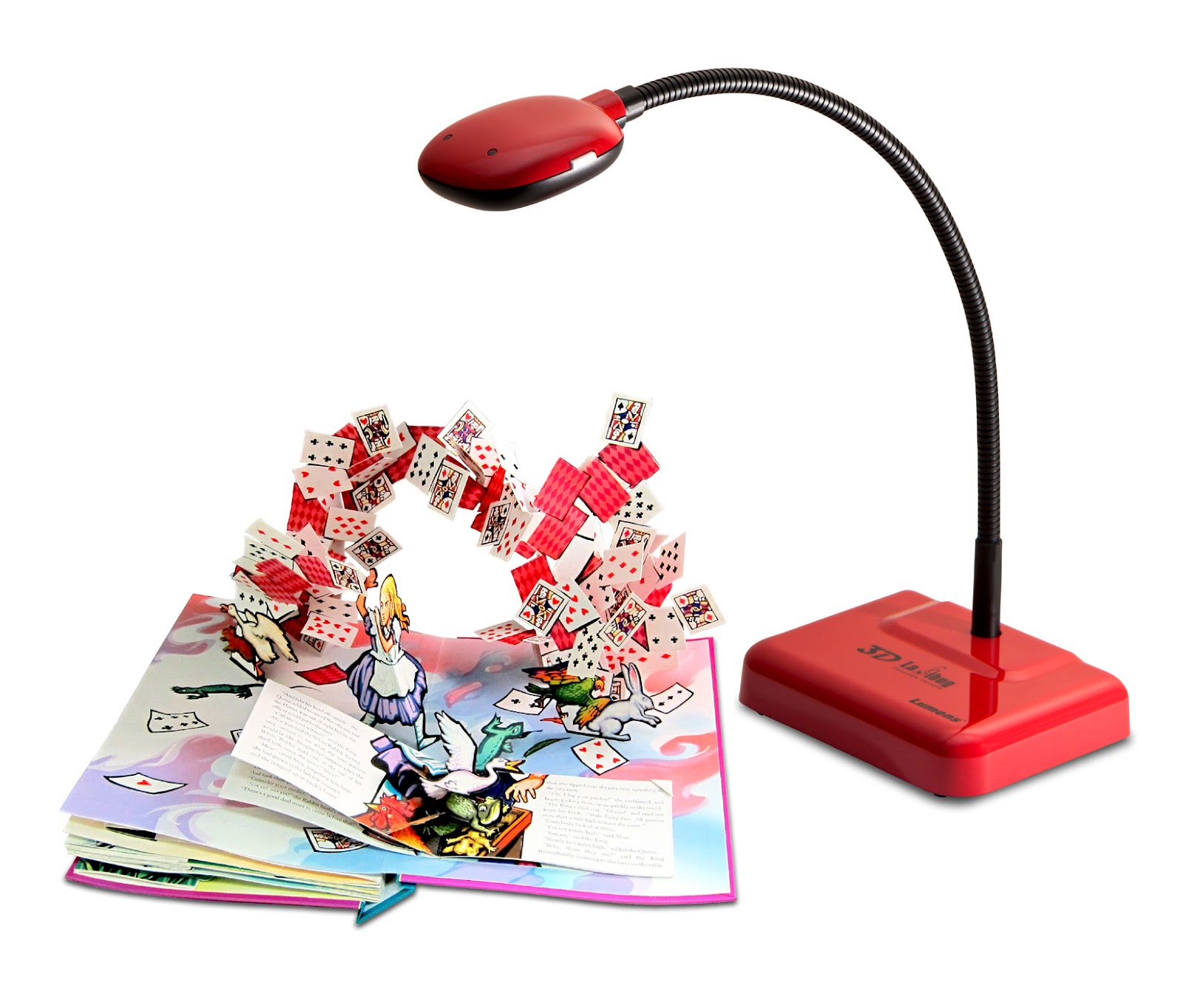
Ground-breaking news in the educational 3D world. Lumens recently released their new 3D Ladibug document camera. This high-definition document camera comes 3D-ready for both 3D DLP projectors and 3D TVs. And don't worry, educators!  The 3D Ladibug easily can function as a 2D visualizer, as well! Lumens is a power player in the document camera industry, so this product release is not a trivial matter.
The context of this product release is not trivial within the education market either. A 3D document camera can be used by teachers to showcase immersive science experiments or model math skills through the visual display of manipulatives, tiny ‘blocks’ or shapes that teach place value, fractions, measurement, or geometry—with depth More importantly, the 3D document camera becomes another stout tool for content creation. Imagine student dioramas, stick or finger puppet shows, or model displays—again, with depth. And even primary children can ‘design’ the content. To learn more, take a look at this case study link and the following product data sheet link. You can also see live demonstrations on the exhibit hall floor at ISTE 2012 in San Diego in June. It’s a great time to be alive.

June 4, 2012

3D Comm


For those readers who want to learn more about 3D in the educational marketplace, or simply wish to increase their knowledge about the possibilities and capabilities of 3D, a high-leverage opportunity is coming your way. 3D Comm Seminars are again being offered at this year’s InfoComm conference in Las Vegas on June 13 and 14.

These 90-minute sessions, taught by Insight Media analysts as well as other leaders in the 3D industry, will focus on “providing unbiased information on many aspects of the 3D ecosystem, and help you gain critical knowledge about technology, markets, applications and uses of 3D.” 

The 3D Comm schedule of offerings includes:

Wednesday, June 13
3D1
Introduction to Stereovision and 3D Human Factors
Chris Chinnock
Insight Media
3D2
Advanced Capabilities of 3D Projection
Victor Vettorello
Vista Systems Corp./ Christie Digital
3D3
System Integration for Stereoscopic Solutions
Norbert Hildebrand
Insight Media
3D4
Introduction to Stereovision and 3D Human Factors
Chris Chinnock
Insight Media
3D5
3D in Visualization/Simulation
Andrew Jamison
Scalable Display
3D7
Autostereoscopic 3D Displays for Digital Signage
Chris Chinnock
Insight Media
3D8
3D Applications - Where, What & Why
Norbert Hildebrand
Insight Media 
Thursday, June 14
3D 9
Content Creation for Stereoscopic Displays
Chris Chinnock
Insight Media
3D11
Introduction to 3D Displays
Chris Chinnock
Insight Media
3D12
Remapping for 2012: 3D and the Education Market Space
Len Scrogan
University of Colorado-Denver
3D13
Deploying 3D Displays Using Touch, Gesture and Motion Tracking Technologies
Kurt Hoffmeister
Mechdyne

As you can tell, I am one of the presenters. I will be speaking about Remapping for 2012: 3D and the Education Marketspace. My focus will be on three key topics:

  • “What does great eS3D look like?”
  • “How can the industry best prepare for the 2012-2013 academic year in the educational marketplace?“
  • “What changes and developments must be considered in order to reach and succeed in the educational market?“
Please join me if you can, and take time to shake hands and chat one-on-one. You can get more information about 3D Comm at this link.

May 28, 2012

Leo Is Here


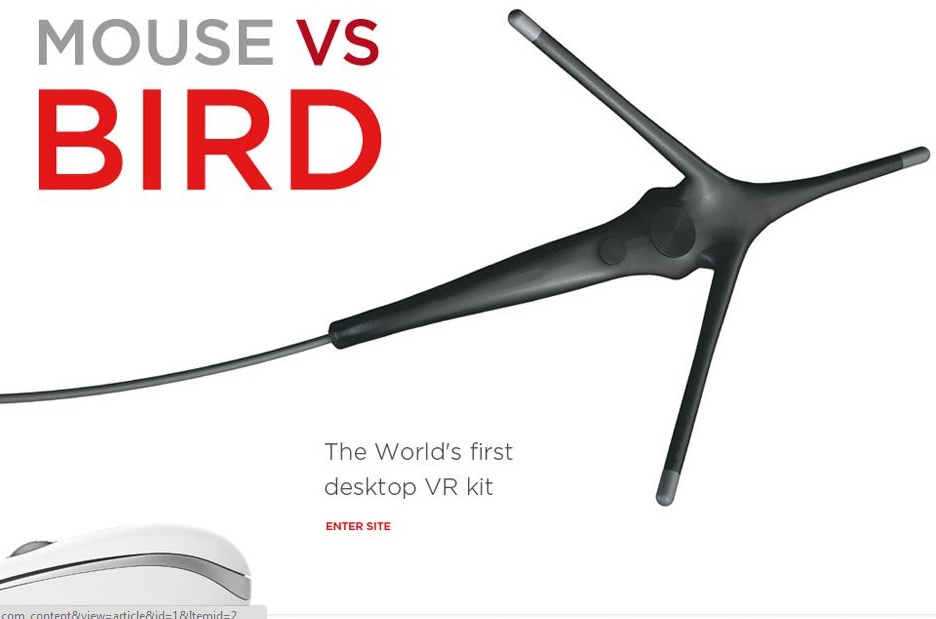
A new 3D tool hit the U.S. for the first time (at both CES and TCEA), Leonar3Do.  Building on the metaphor of the engineering, design work, and creativity of the famous inventor/artist/engineer Leonardo daVinci, this group (and their U.S. reseller) offers a “mixed reality” stereo 3D desktop VR kit.  Check out this video to see how this technology conceptually works.  This company produces “an interactive tool that not only displays, but also integrates into your own personal 3D space.”  It features the bird, a special 3D handheld controller than enables the user to reach, grab, work and play with objects.  Currently, they are offering educational, professional, home, and conference center editions of their product. This tool advances the possibilities for student content creation, especially at the high school, college, and university level. For educators, this tool would make a strong basis for an excellent grant proposal.

May 21, 2012

ISTE 3D Preview


The ISTE 2012 educational conference, scheduled for San Diego in June, is offering four powerful educator presentations in the area of stereo 3D. Make plans to be there and learn about the latest in stereo 3D DLP technologies for the classroom. Click on any link to learn more.

When 3D Comes to Your School
Saturday, 6/23/2012, 12:30pm–3:30pm
Presenter: Len Scrogan, University of Colorado-Denver
This is a comprehensive three-hour workshop on everything you need to know about creating a stereo 3D classroom or pilot project in your school or district.
3D in Education
Tuesday, 6/26/2012, 5:00pm–6:15pm
Nancye Blair, McKeel Elementary Academy with Len Scrogan
This is a birds-of-a-feather gathering for teachers or leaders interested in learning or talking about teaching with stereoscopic 3D. It is an open-ended discussion focusing on emerging resources and best practices for using 3D technologies to increase student engagement and learning gains.
Exploring 3D Technology in the Classroom: Strategies and Lessons Learned
Tuesday, 6/26/2012, 1:00pm–3:00pm
Carole Hruskocy, Regis University with Sandra Foster
How does 3D technology in a science classroom affect learning and teaching? Explore this emerging technology and find out the results from a third-year extension of the BVS3D research study, presented by University researchers in a two-hour stay-as-long-as-you-want poster session.
Teaching in 3D: Why It Works, Why It Matters
Tuesday, 6/26/2012, 10:00am–12:00pm
Presenter: Len Scrogan, University of Colorado-Denver
Discover how stereo 3D visualization technology is being used effectively in K-12 classrooms, how it affects student thinking and performance, and why it matters. Presented in a two-hour stay-as-long-as-you-want poster session.